Hong Kong loses deep-sea services as cargo shifts to mainland ports
Shipping alliance changes are reducing some deep-sea and Asia-Europe calls as Hong Kong shifts towards smaller regional services.
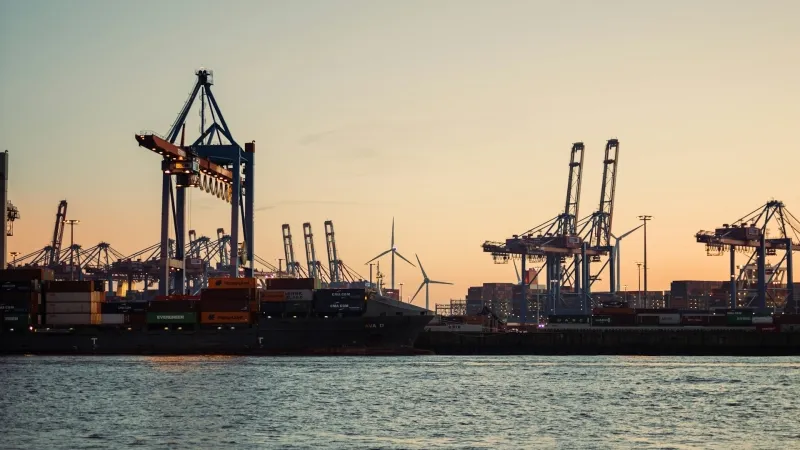
Hong Kong’s port is seeing more vessel calls but less cargo as its shipping mix shifts away from larger deep-sea services, according to Prof. Dong Yang, associate professor and associate head of the Department of Logistics and Maritime Studies at The Hong Kong Polytechnic University.
“More vessel calls do not necessarily mean more cargo,” Yang said, noting that many additional calls are from smaller regional vessels carrying fewer containers per call.
Yang said changes in shipping alliance networks have reduced some deep-sea and Asia-Europe calls at Hong Kong, whist the port has become relatively stronger in Southeast Asian and other regional services.
This has shifted traffic from fewer large deep-sea calls towards more short-sea calls. Hong Kong’s traditional gateway role for South China has also weakened as Shenzhen and Guangzhou capture more traffic because they are closer to major cargo sources.
The trend differs from major mainland ports such as Shanghai, Shenzhen, and Guangzhou, which have continued to grow because they serve large manufacturing and consumer markets and are closer to cargo sources. China’s consolidation of ports into larger provincial and regional groups has also helped coordinate cargo flows and investment.
Singapore has grown through its role as a global transshipment hub and crossroads of major trade routes, supported by dense connectivity, efficient bunkering and a broad maritime service ecosystem.
For Hong Kong, Yang said it needs to compete through “specialised cargo, regional connectivity, and higher value maritime service.”
This includes targeting high-value and time-sensitive cargo such as pharmaceuticals and high-tech products, where its cold-chain facilities and established handling procedures could provide an advantage.
Hong Kong should also strengthen ASEAN whilst developing cargo flows from southwestern mainland China, the Middle East and South America through better multimodal connections.
Yang also called for clearer role-sharing with Guangzhou and Shenzhen rather than competing for the same cargo, alongside earlier investment in green corridors, alternative-fuel bunkering and carbon-management services.













 Read Here
 Advertise
 Sign Up




Commentary
How Hong Kong SMEs should set boundaries for agentic AI in B2B selling
Stablecoin payments are going mainstream. Hong Kong and APAC are showing how