Prudential says AI could cut insurance product development to 6 weeks
Traditional actuarial processes can take 4 to 6 months.
Prudential plc sees opportunities to cut insurance product development cycles from four to six months to as little as six to eight weeks using artificial intelligence (AI), potentially allowing insurers to introduce new products faster and tailor coverage to different customer segments.
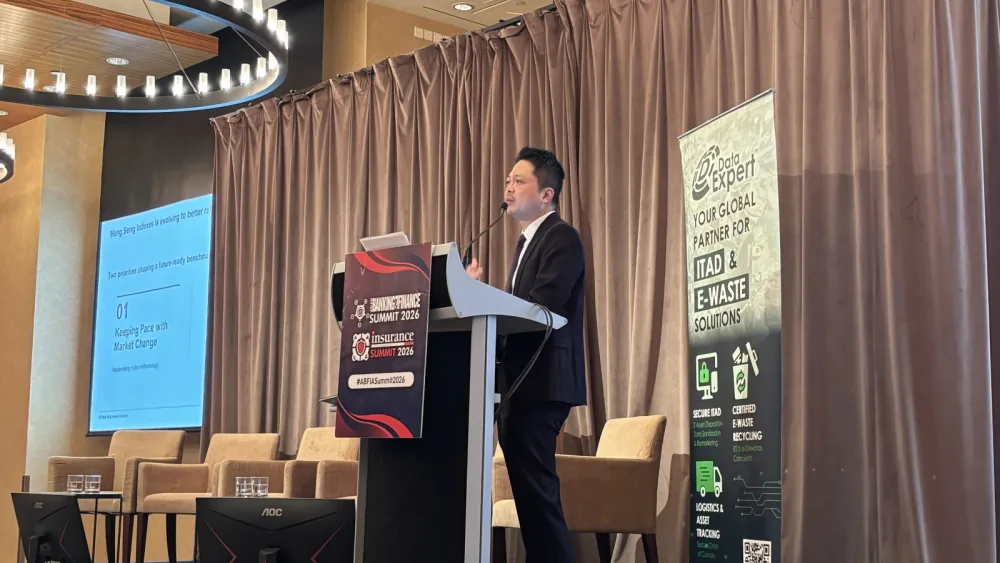
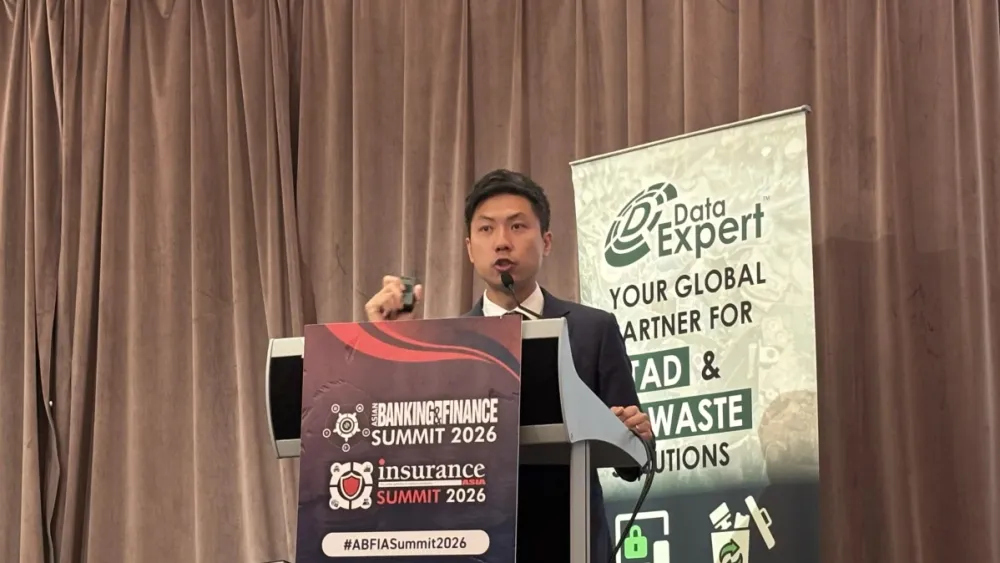
“I estimate that with this kind of just like an AI product entry, right? It can actually shorten the time for four to six months to actually maybe just six weeks, eight weeks,” Priscilla Ng, Group Chief AI Business Officer and Group Chief Customer and Marketing Officer at Prudential plc, told Tim Charlton, editor-in-chief, in a fireside chat at the Asian Banking & Finance and Insurance Asia summit in Hong Kong on 5 November.
The potential reduction would address a longstanding challenge for insurers, where actuarial calculations, product pricing and legacy systems can delay the introduction of new policies.
Ng said developing insurance products traditionally requires actuaries to conduct extensive calculations to determine premiums and assess risks based on factors such as smoking status and other customer characteristics.
These processes can take several months, limiting how quickly insurers can adjust their offerings to changing market conditions and customer needs.
A September 2026 report by KPMG International found that 71% of insurance executives primarily used AI for content generation or routine task automation, whilst only 29% reported running end-to-end processes through AI agents or automation.
The report also found that 92% of insurers reported productivity improvements or lower operating costs from AI, but only 25% were using the technology to support growth through new products and services.
Despite the potential reduction in development time, Ng stressed that human oversight would remain necessary, particularly in actuarial calculations and pricing decisions.
“We cannot just rely on the agent and the the AI to actually come up with the pricing model; you have to have a human in the loop to check about it,” Ng said.
She expects faster product development to allow insurers to offer more customised products to different customer segments, rather than relying on standardised offerings that take months to design.
However, the projected reduction to six to eight weeks remains an estimate rather than a confirmed improvement achieved by Prudential. Beyond product development, the insurer is investing in AI across three areas: agency distribution, operations and healthcare services.
For insurance agents, AI tools can analyse customer information, identify protection and wealth accumulation gaps, and generate reports before client meetings.
Ng said these capabilities could reduce preparation time and help advisers concentrate on customer discussions rather than administrative work.
Prudential is also using AI-powered coaching tools that allow agents to practise sales and service skills at any time, replacing some of the limitations of scheduled classroom training. Managers can monitor training participation, assess performance and identify employees who may need further support.
In underwriting, Prudential is exploring how AI can shorten the time needed to provide customers with preliminary assessments of their insurance eligibility.
Ng described an application in which an agent can use an AI chatbot to assess a customer's medical circumstances, indicate the likelihood of approval and identify the documents required.
Such tools could reduce the time needed to provide preliminary feedback from approximately one week to minutes, although final approval would still depend on underwriting requirements.
The insurer is also applying AI to healthcare access in Indonesia, where customers can use WhatsApp-based tools to seek doctor recommendations and arrange appointments.
In Hong Kong, AI is being used to help customers review multiple Mandatory Provident Fund accounts by analysing photographs of their statements and consolidating the information.
Customer feedback analysis represents another application. Ng said Prudential receives approximately 11,000 customer comments annually across Asia, making manual review difficult. AI allows the insurer to analyse these responses, identify recurring complaints and provide management teams with insights into service issues.
However, expanding these applications across markets presents challenges involving data infrastructure, regulatory requirements and employee adoption.
Ng identified common data standards, reliable system architecture and AI governance as essential foundations for scaling the technology across Prudential's operations in Asia and Africa.
The September 2026 KPMG report found that only 11% of surveyed insurers considered their data foundations and governance strong enough to scale AI effectively, whilst just 8% rated their workforce as highly proficient in AI tools.
Ng said employee adoption was particularly important because investments in technology would deliver limited benefits if staff did not incorporate the tools into their daily operations.
“You can build the best technology, but at the end of the day, are you using the technology for enabling your business to apply to your clients is most important,” she said.
Looking ahead, Ng expects insurers to move beyond using AI for routine analysis towards more advanced applications that support product development, customer service and decision-making.



















 Read Here
 Advertise
 Sign Up