About 88% optimistic about stablecoins despite low live use
More than 3 in 4 said a 1:1 fiat parity would boost confidence in stablecoins.
Over 88% of businesses positively expect stablecoins to have lower FX markups, hidden fees and cost leakage, whilst 87% expect better real-time payments, according to a Morph payments survey on 11 November.
The survey identified three recurring payment pain points for Hong Kong businesses: delays, hidden costs, and banking disruptions.
According to Morph, over 79% find high transaction fees and FX markups a problem in cross-border payments. Over 68% said slow processing affects cash flow, whilst 66% struggle to predict when a cross-border transaction would arrive.
About 55% had experienced blockage or delays with international wire transfers. Another 38% said these disruptions made it difficult to pay suppliers, contractors or employees.
For 94% of respondents, an alternative payment channel would be beneficial—such as stablecoins that could provide continuity and certainty for transactions.
Amongst 24 respondents using or considering stablecoins, over 92% expect faster, 24/7 access to their capital and better real-time payment tracking.
Within the same group, 79% said direct 1:1 parity with local fiat would heavily influence adoption confidence.
However, Morph said that only 10% of 149 respondents familiar with stablecoins were currently using them.
“A stablecoin payment is not resilient if the recipient simply exchanges one form of uncertainty for another. [Stablecoins] are not just an additional rail. It is an additional rail that lets a business see the payment, preserve its value and meet its next obligation,” said Renna Ba, director of operations at Morph.
Rather than replacement, Morph said stablecoins should be framed as business continuity—an alternative rail with predictable fiat value and local conversion that could sustain businesses when the usual payment routes are disrupted.
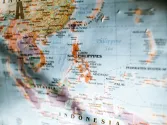
The report titled “The Cost of Getting Paid” surveyed 150 independent operators, freelancers, solo consultants and business decision-makers for cross-border payments across Singapore, Hong Kong, the Philippines, Indonesia and Vietnam.












 Read Here
 Advertise
 Sign Up