Hong Kong's green shipping ambitions face demand test
Only three methanol bunkering operations have been recorded since June 2025.
Limited methanol demand is testing the commercial viability of Hong Kong's green-fuel bunkering market despite government incentives.
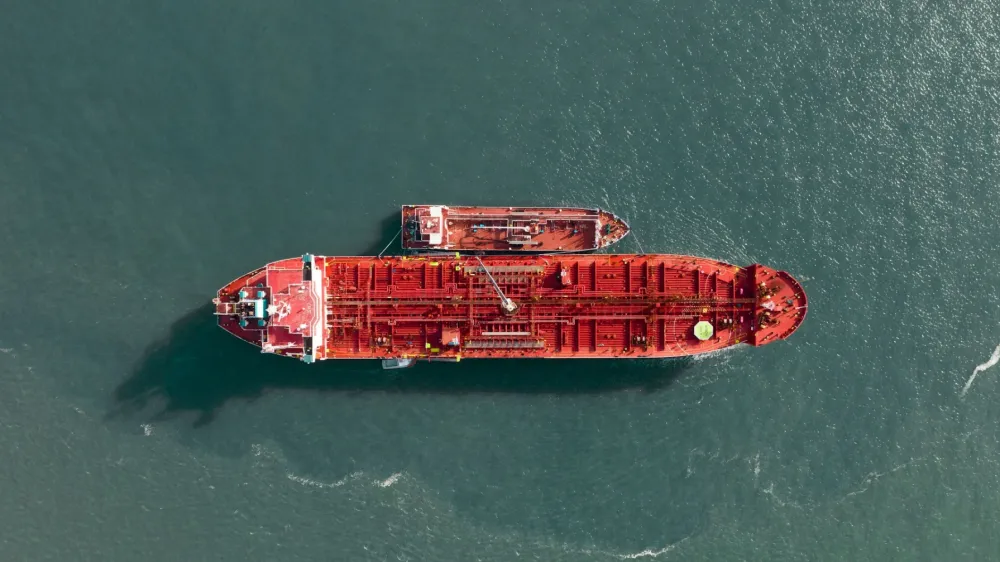
Hong Kong had 42 liquefied natural gas (LNG) bunkering operations and three methanol bunkering operations as of 30 Sept September since the Green Maritime Fuel Bunkering Incentive Scheme launched on 30 June 2025, Luis Shi, deputy director of marine at the Hong Kong Marine Department (HKMD), said in an emailed reply to questions.
“Three operations are not surprising at this stage,” Christine Loh, chief development strategist at the Hong Kong University of Science and Technology's (HKUST) Institute for the Environment, told Hong Kong Business.
Loh is also a member of HKUST’s Environment and Sustainability Division, which is carrying out a research project whose results are for Hong Kong’s Transport and Logistics Bureau and Environment and Ecology Bureau. She stressed that her comments are her own views and are not connected to that project.
LNG has more vessels, established infrastructure, and fuel supply, whilst methanol remains constrained by the number of compatible ships, the cost and availability of green methanol, and limited demand.
Loh said methanol bunkering requires long-term fuel supply agreements and commitments from shipping lines before it becomes a regular commercial service rather than a series of demonstration projects.
Hong Kong has shown it can supply alternative marine fuels, but the gap between LNG and methanol bunkering suggests demand for green fuels remains limited.
“The real test is whether bunkering becomes self-sustaining as subsidies decline,” Loh said in an emailed reply to questions.
HKMD paid $3m under the incentive scheme in fiscal year 2025-2026. LNG suppliers received $2m, the programme's maximum allocation for LNG, covering four operations, whilst methanol suppliers received $1m for two operations.
The government has paid $500,000 for one methanol operation in fiscal year 2026-2027 and reserved another $500,000 for a further operation. No LNG incentives have been paid this fiscal year after the LNG allocation was exhausted in the previous year.
Only four of the 42 LNG bunkering operations received financial support, indicating most LNG activity has proceeded without subsidies.
HKMD introduced two additional support measures on 16 June 2026.
One provides port dues rebates of 25% to 50% for ocean-going vessels powered by, bunkering, or carrying green fuels. The other offers a registration subsidy of $60,000 a year, capped at $180,000 per vessel, for Hong Kong-registered ships using green fuels as their primary fuel.
As of 15 October, 23 vessel calls had been approved under the port dues rebate scheme, Shi said. HKMD previously projected more than 1,000 eligible vessel calls or bunkering operations over the programme's three-year duration.
The marine department also expects the registration incentive to attract about 100 additional green-fuel vessels to the Hong Kong register within three years. The registry had more than 2,000 ships as of July 2026.
Loh said adding 100 vessels would be meaningful but not transformative because it would represent only about 5% of the fleet. She added the subsidy is unlikely to determine whether shipowners buy green-fuel vessels and is more likely to influence where operators register ships that already use alternative fuels.
Shi said Hong Kong is pursuing a multi-fuel strategy similar to Singapore, Rotterdam, and Shanghai. Loh said near-term investment should focus on LNG and methanol, where fuel supply and demand are more credible.
Hong Kong's first Five-Year Plan for green maritime fuels targets 7% of Hong Kong-registered vessels using green maritime fuels by 2030. Shi said about 80 Hong Kong-registered ships, or roughly 4% of the fleet, are capable of using such fuels.
The plan also targets five Green Energy Corridors by 2030. The first corridor, linking Hong Kong with a mainland Chinese fuel-supply hub, is expected to be announced later this year.
Loh said Hong Kong has made progress in developing rules and bunkering capability, but the next phase will require regular fuel demand, reliable supply, competitive pricing, and closer coordination with shipping companies and fuel suppliers.
“Hong Kong's push is early-stage and credible,” she said. “It needs to move from regulatory preparation and one-off operations to regular commercial bunkering.”












 Read Here
 Advertise
 Sign Up