How will Hong Kong deepen its international economic and trade networks?
Measures include investment agreements, digital trade reforms, and stronger transport and logistics infrastructure.
Chief Executive John Lee outlined a series of measures in his 2025 Policy Address aimed at expanding Hong Kong’s international economic and trade networks, including new investment agreements, digital trade reforms, and stronger transport and logistics infrastructure.
Lee said the government is exploring new investment agreements with Saudi Arabia, Bangladesh, Egypt and Peru, whilst an Economic and Trade Office will open in Kuala Lumpur this year to strengthen links with ASEAN and neighbouring countries. The government also plans to extend the ETO network to Latin America and Central Asia.
To promote digital trade, a legislative proposal will be introduced next year to digitise business-to-business trade documents. The Trade Single Window will be expanded to cover more documents and connected with the Mainland’s single window, with the feasibility of linking to ASEAN also under study.
Lee said half-rate tax concessions will be offered to attract commodity traders, with legislative amendments planned for the first half of 2026. A Strategic Committee on Commodities led by the Financial Secretary will be created to guide long-term policy, and Hong Kong will strengthen links with the Guangzhou Futures Exchange and other Mainland markets.
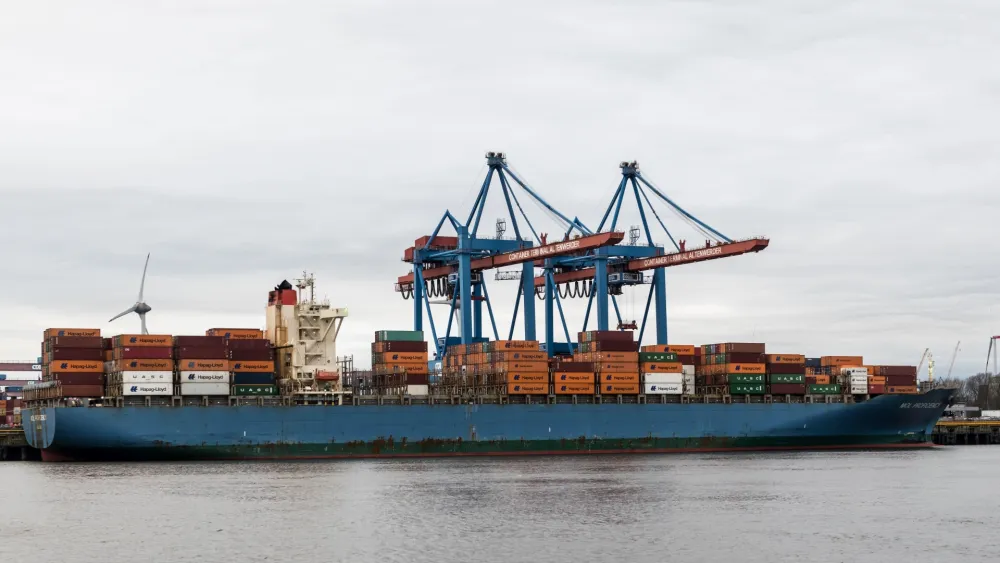
Infrastructure projects will support these efforts. A “rail-sea-land-river” intermodal transport system will be developed to channel cargo from inland Mainland provinces through Hong Kong to global markets. The Merchant Shipping (Registration) Ordinance will be amended next year to simplify and digitalise ship registration, while the Port Community System, launching in January, will provide cargo tracking and integrate sea, land, and air networks.
Hong Kong will also release a study this year on logistics clusters in the Hung Shui Kiu/Ha Tsuen New Development Area, invite industry interest in 2026, and continue developing Airport City. Construction of AsiaWorld-Expo Phase 2 has begun, with completion set for 2028, and the Airport Authority will seek interest next year in developing a yacht bay to open in phases from 2028.
Other measures include building a logistics park in Dongguan to support air cargo, expanding Air Passenger Departure Tax exemptions to transit passengers from October, and reinforcing Hong Kong’s legal and dispute resolution services.
Lee said the government will support the work of the International Organisation for Mediation, build a Hong Kong International Legal Service Building, and create a Hong Kong International Legal Talents Training Academy. The Deputy Secretary for Justice will promote Hong Kong’s legal services and work with sectors such as finance and accounting to support Mainland enterprises expanding overseas.













 Read Here
 Advertise
 Sign Up