Rising rents outpace income despite price decline in Hong Kong
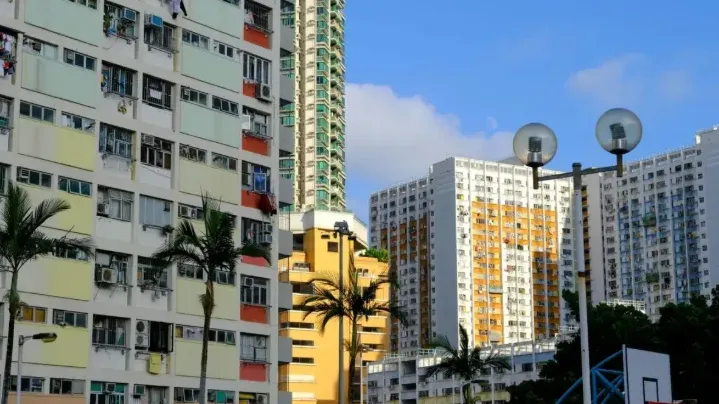
Hong Kong remains one of Asia Pacific’s least attainable housing markets.
Falling home prices in Hong Kong have done little to ease one of the world’s most persistent affordability crises, according to the 2025 Asia Pacific Home Attainability Index released by the Urban Land Institute (ULI).
The report reveals that although the price-to-income ratio for homes has improved slightly—from 26.5 times median household income in 2022 to 23.4 times in 2024—Hong Kong remains the second most unaffordable housing market in the region. The affordability benchmark for ownership, by comparison, is five times annual income.
“The problem is that Hong Kong housing started out very expensive, and so even though we've seen quite significant house price falls in the past couple of years, they're still very expensive,” said Mark Cooper, Senior Director, Thought Leadership, Asia Pacific, ULI.
Ryan Ip, Vice President and Executive Director of Public Policy Institute at Our Hong Kong Foundation, attributed the persistent unaffordability to structural constraints. “There is a limited supply of housing land. We are a very small city to begin with. And more importantly, only 25% of our land is developed, and only 7% of it is for housing,” he said. “Construction cost has more than doubled over the past two decades due to the aging of the construction worker force and more cumbersome government procedures.”
The index shows that average rents now consume 72% of median monthly income, up from 70% in 2022. Cooper noted that falling prices have paradoxically pushed more people into the rental market. “Even though people might be able to afford to buy an apartment, they might be staying out of the market because they expect prices to fall further,” he said. “That obviously adds to pressure on the rental market.”
Government policies, such as the Top Talent Pass Scheme, have also added new layers of demand. “In the past couple of years, [it] has awarded visas to just over 90,000 people,” Cooper said. “People who have these visas… will inevitably be in rental accommodation.”
Ip pointed to economic conditions and interest rates as drivers as well. “The mortgage rate in Hong Kong has been higher than the rental yield ever since the second half of 2022,” he said. “That pulls a lot of the end users from buying a unit to choosing to rent.”
Cooper suggested expanding shared ownership schemes or converting vacant office space for residential use. Ip emphasised the need for a balanced approach. “We have to keep a steady flow of housing supply… and make sure there will be enough supply of public subsidised housing so that the lower and middle income family can also purchase their own unit at an… affordable cost.”















 Read Here
 Advertise
 Sign Up





Commentary
How Hong Kong SMEs should set boundaries for agentic AI in B2B selling
Stablecoin payments are going mainstream. Hong Kong and APAC are showing how