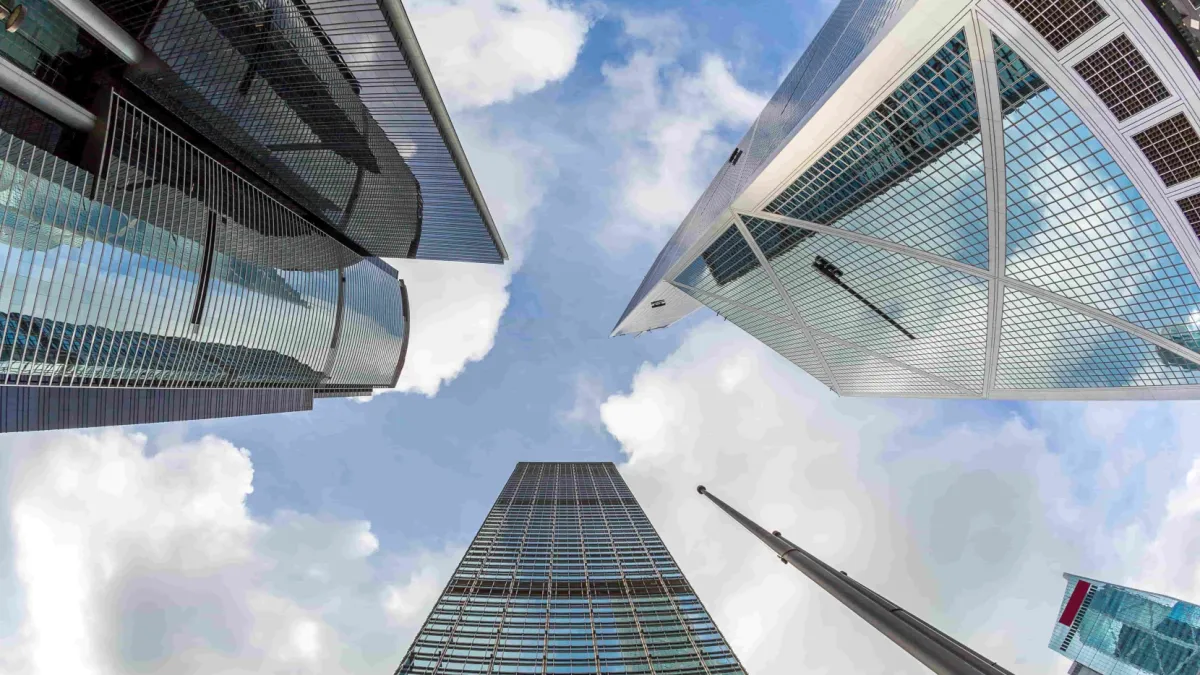
Hong Kong firms buy offices after price slump
Grade A office prices remained 49% below their 2018 peak in Q2.
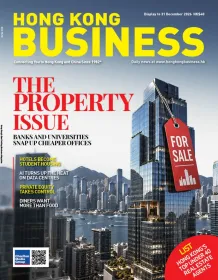
Falling office prices and lower borrowing costs are prompting banks, mainland companies, and universities to buy offices in Hong Kong instead of leasing them.
“Prime assets with strong fundamentals, conversion potential, or owner-occupier demand should outperform over the next 12 months,” Jack Tong, director of research and consultancy at Savills (Hong Kong) Ltd., said in an emailed reply to questions.
Grade A office prices were about 49% below their 2018 peak in the second quarter, whilst investment activity improved as prices became more realistic, Savills said in an August report.
Office transactions accounted for the biggest share of Hong Kong's commercial property deals as buyers became more confident that prices had adjusted enough to support a recovery, Rosanna Tang, deputy managing director and head of research for Hong Kong at Cushman & Wakefield Ltd., said in an email.
Hong Kong's big nonresidential transactions rose 84% year on year to $23.2b in the first half, according to Cushman & Wakefield.
Tong cited DBS Bank (Hong Kong) Ltd.'s acquisition of six floors at The Center for about $2.5b as an example of well-capitalised occupiers buying prime offices after the price correction.
He said Central and Admiralty offer some of the strongest opportunities for buyers because of their accessibility, efficient layouts, and prices below replacement cost.
Educational institutions are also becoming more active buyers, said Reeves Yan, head of capital markets at CBRE Advisory Hong Kong Ltd.
The University of Hong Kong acquired 92–103A Connaught Road West for nearly $4b, one of the largest recent transactions.
“We are also seeing increased investor interest in repositioning opportunities, distressed assets, and receiver sales,” Yan said in an emailed reply to questions.
Owner-occupiers are becoming more active in strata offices in Admiralty, Sheung Wan, and the Central fringe, said Oscar Chan, head of capital markets at Jones Lang LaSalle Ltd.
“What changed is the cost of money,” he said in an emailed reply to questions, noting that the Hong Kong Interbank Offered Rate had fallen to about 2%-3%.
For several years, owners paid more in interest than they earned in rent. That gap has now closed for well-let secondary assets, Chan said.
Investors are also targeting hotels, en-bloc residential properties, and Grade B commercial buildings that can be converted into student accommodation.
Chan cited Wee Hur Holdings Ltd.'s $748.8m purchase of One Bedford Place in Tai Kok Tsui for student housing. Savills also noted that Centaline Strategic Investments Ltd. bought Regal Oriental Hotel for the same purpose.
Southeast Asian investors are becoming a bigger source of capital. Singaporean buyers accounted for more than 60% of inbound international investment in the second quarter, according to Thomas Chak, head of capital markets and investment services at Colliers International (Hong Kong) Ltd.
“We expect capital from family offices, private wealth investors, and institutional funds seeking counter-cyclical opportunities to become increasingly active,” Chak said in an email.
Interest rates remain a key risk. Chan said higher US rates could push up borrowing costs, whilst Tong said restructuring, receivership, and distressed sales are likely to continue weighing on parts of the commercial property market.













 Read Here
 Advertise
 Sign Up