Noreen Jazul
Exports value dip 6.4% YoY to $380.7b in June

Exports value dip 6.4% YoY to $380.7b in June
The Census & Statistics Department said exports to the Mainland continued to fall.
Why landlords are becoming more optimistic about the retail market
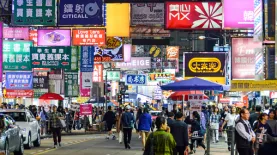
It’s partly because of the new administration.
Landlords are becoming more optimistic about the retail market, and it's partly thanks to the new administration, said CBRE.
In a report, CBRE said the measures of the new administration to revitalise the economy has given landlords a confidence boost.
Also contributing to the landlords’ improved optimism is their belief that high-street rents have already bottomed out.
“They are expecting rents to be stabilised or to be improved from the current levels,” said CBRE, adding that landlords also feel that in the future, the impact of the pandemic on the retail market will be “limited.”
Brands and retail operators, for their part, are also “actively deploying their business strategies with most having new stores opening in the plan for the coming year,” said CBRE.
Segments which are most active in terms of expansion are healthcare, supermarkets, high-end household goods and daily necessities.
On the flip side, CBRE said landlords and tenants are still in a stage of the seesaw battle when it comes to compromising on the rental terms.
Given the situation, the expert said retail vacancy level in H2 will likely remain stable, whilst rents will only increase by a meagre 0% to 5%.
HK allows home quarantine for carriers of 3 Omicron sub-variants
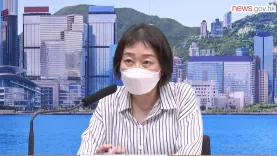
However, patients can only opt for home isolation if they fulfill relevant requirements.
Patients carrying Omicron sub-variants BA.2.12.1, BA.4 and BA.5 will no longer be required to isolate in government-run facilities and can now just undergo home quarantine, the Centre for Health Protection Communicable Disease Branch Head Dr. Chuang Shuk-kwan announced on 20 July.
The same rule applies for the close contacts of patients, Chuang added.
However, Chuang said patients can only opt for home isolation if they fulfil relevant requirements and their household environment is suitable.
“Such arrangements will be the same as those for other Omicron cases,” the medical expert said.
As of 18 July, Hong Kong has 1,093 cases carrying the Omicron sub-lineage BA.2.12.1 and 372 involving the sub-lineages BA.4 and BA.5.
“The World Health Organization noted that there is no severity signal among the BA.5 subvariant. The BA.5 subvariant has a growth advantage over other sub-variants but we have not observed any increase in severity among those patients suffering from it,” Chuang said.
89% of local investors want to invest in new assets

Most of them are interested in private equity.
Want to get hired? Internship experience is key: research

About 90% of employers also say value internship experience more than educational background.
Fifth wave pushes back retail market in H122
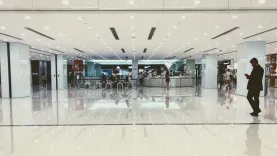
Rents of high street shops and prime shopping centres dropped 9.8% and 4.8%, respectively.
Grade A office market logs net absorption of 1.25 million sq ft in H122

Leading the market in recovery is the Central segment.
Haidilao eyes spin-off and listing of overseas unit in HKEX

The hotpot company will be listing the spin-off by way of introduction.
HK requires tracking bracelets for home quarantined individuals
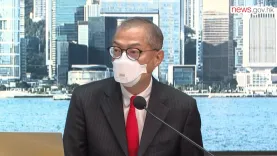
Quarantined residents will have to wear the bracelets starting 15 July.
Hang Seng issues $100-m green trade facility for Leo Paper

This marks the first green trade facility for Hong Kong’s paper and printing industry.
HK aims to regain crown as favoured arbitration hub with outcome-related fee structure bill

Under the arrangement, lawyers can make more if their case succeeds.
HK halts route-specific flight suspension mechanism
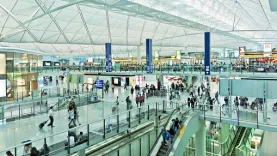
Inbound travellers will undergo an additional nucleic acid test on their third day of arrival.
FS Chan to lead committee on land and housing supply

Chan said his committee will publish a 10-year land supply forecast.
Commercial real estate investment deals hit $16.0b in Q2
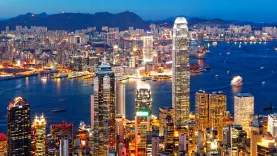
This translates to a 17.5% increase from last quarter.
Warehouse vacancy drops to its lowest level in 8 years

Vacancy edged down to 1.4% in Q2 2022.
Waiting time for public rental housing to increase within 5 years

It was already increased to 6.1 years in March 2022.
High-street shop vacancy rises to 16.5% in Q2 22
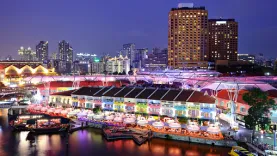
Amongst core districts, Tsim Sha Tsui had the biggest vacancy rate.
High-street shop vacancy rose 1.3 percentage points from Q122 to hit 16.5% in Q2 22, data from CBRE showed.
The increase in vacancy was likely due to some landlords, who are under limited financial pressure, opting to leave units vacant rather than renting them out.
This practice was most evident in Tsim Sha Tsui and Mong Kok where vacancy rates were the highest, at 23.2% and 18.9%, respectively.
Whilst vacancy rose during the quarter, rents remained flat. According to CBRE, rents were unchanged from Q122 because “cash-rich landlords with strong holding power prevented some units from transacting at lower rents this quarter.”
In addition to rents being unchanged, leasing volume also increased in Q2, signalling an improvement in the retail property sector.
“Improved retailer sentiment underpinned an increase in transaction volume, although many deals signed this quarter involved short-term leases,” CBRE commented.







 Read Here
 Advertise
 Sign Up









Commentary
Why Hong Kong's carried interest reform matters, and why it isn't a zero-sum play
Medical centre expansion in Hong Kong: How to choose the right location
The Claude ban is a crash course in digital resilience — and that’s good for Hong Kong bankers