Hong Kong: At the forefront of digitalisation and evolving international disputes
By Byron PhillipsShareholder and joint venture disputes are booming in Hong Kong, often involving offshore jurisdictions.
Hong Kong’s disputes environment is being reshaped by increased internationalisation and a convergence of digitalisation and innovation, regulator activity, and persistent macroeconomic uncertainty.
Hong Kong is an increasingly international disputes market, illustrated by the Hong Kong International Arbitration Centre (HKIAC)’s record caseloads and the Hong Kong Judiciary’s recent announcement of its initiative to establish an International Commercial Court, reflecting the increasing demand for a specialist judicial forum to address the significant growth in international and cross-border commercial activities in recent years.
For businesses, financial institutions, investors, and advisers operating in or through Hong Kong, disputes are becoming more complex, more cross-border in character, and more closely tied to digital transformation and disruption, governance and stakeholder risk, and supply chain resilience.
Market participants increasingly face multi-dimensional risk events with regulatory, financial, operational, and reputational consequences. This article focuses particularly on Hong Kong’s position at the frontier of digitalisation and innovation and how this contributes to its transforming disputes landscape.
Digitalisation: Fertile disputes ground
Digitalisation, powered by a suite of transformative tools, such as artificial intelligence (AI), cloud computing, IoT and automation, is proving to be a major factor in the growth and evolution of the Hong Kong disputes landscape.
As organisations deploy increasingly sophisticated technology tools across compliance, operations, customer service, credit assessment, fraud detection, and investment workflows, they are creating new exposures around data security, data quality, model governance, privacy, intellectual property, and accountability for automated decisions.
A data breach, for example, can trigger claims from customers, counterparties, regulators, and insurers. A flawed model can give rise to losses, mis-selling allegations, employment disputes or negligence claims. Poor data lineage or weak controls can undermine auditability and create disagreement over which outputs were reliable, who approved them and whether they were fit for purpose.
If a firm relies on AI-generated outputs without appropriate validation, the resulting dispute may look less like a technology incident and more like a governance failure.
AI and automation in particular raise difficult questions of liability, intellectual property ownership, and protection of confidentiality and privilege. Parties may disagree about who owns the underlying data, whether training data was lawfully used, whether outputs infringe third-party rights, and whether contractual warranties accurately described system performance or limitations.
In many cases, the real issue will be not just whether AI performed poorly, but whether the organisation had adequate human oversight, documentation and incident response processes. That makes AI governance in particular a dispute-prevention issue as much as an innovation issue.
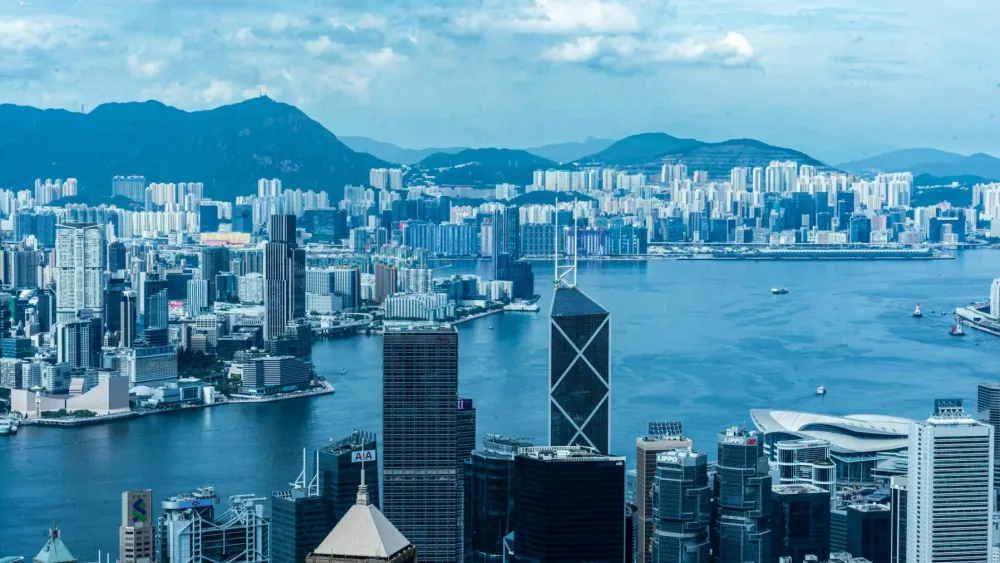
Hong Kong has emerged as a hotspot for new technology companies, driven by its strategic position as a gateway between the Chinese mainland and global markets, business-friendly environment, strong financial infrastructure and a vibrant startup ecosystem supported by government initiatives such as Cyberport and the Hong Kong Science and Technology Parks.
It is a natural consequence, therefore, that we are seeing a significant uptick in corporate and company law disputes in Hong Kong
In particular, shareholder and joint venture disputes are booming in Hong Kong, often involving offshore jurisdictions, due to common corporate structures where the Holdco is incorporated offshore and the opco/propco entities are incorporated onshore.
HKIAC and the HK courts are awash with disputes focusing on minority protections, control disputes, fraud, related-party transactions and breaches of non-compete provisions, information asymmetries, redemption and vesting matters, capital allocation, and the handling of strategic risks. These trends are being driven by the speed of innovation, macroeconomic pressure and geopolitical tensions (which are having a particular relevance to technology and technology-related companies given the global technology race).
Regulatory activity: An extra layer of risk
Part of the reason for this is that companies face growing obligations around governance, disclosure, anti-money laundering, sanctions screening, data handling and sustainability-related reporting. These obligations do not merely increase administrative burden; they also widen the scope for challenge when expectations are not met, documents are incomplete, or disclosures are alleged to be misleading.
Hong Kong’s regulatory environment has been active in 2026, with authorities intensifying oversight across virtual assets, listed companies, and market conduct. Recent moves have included the advancement of new licensing regimes for virtual asset dealing and custody, the granting of stablecoin issuer licences under the Stablecoins Ordinance, and continued disciplinary actions by HKEX against issuers and directors for rule breaches and governance failures.
Both the HKMA and the Securities and Futures Commission (SFC) are pushing ahead with market oversight and rule-making. In recent weeks, the two regulators jointly consulted on amendments to the OTC derivatives clearing rules, whilst the SFC separately advanced new measures on virtual assets, including circulars on stablecoin-related services and funds with virtual-asset exposure; the HKMA has also continued to act on conduct and compliance issues, including fraud alerts and enforcement matters involving regulated institutions.
Hong Kong’s position as an international finance centre and a hub for digitalisation and future-facing technologies will continue to shape its disputes landscape as regulation and the law seek to keep pace with innovation.
The increasing internationalisation of its disputes market is a reflection of its global importance and influence, and that trend will no doubt continue, as HKIAC’s prominence and the proposed International Commercial Court will testify.


















 Read Here
 Advertise
 Sign Up