Hong Kong diners seek more than good food
They want a story on the plate, not just protein and starch.
Hong Kong restaurants are investing more in storytelling, service, and atmosphere as consumers increasingly choose dining experiences that go beyond the food.
“Diners are no longer just hungry”, Manav Tuli, owner of Leela, said in an emailed reply to questions. “They want a story on the plate, not just protein and starch.”
At the Indian restaurant, diners ask about the origins of spices and the inspiration behind Hong Kong-influenced dishes such as tandoori eel and lamb keema ham sui gok.
Tuli said Leela builds on that curiosity through tableside finishing, chef storytelling, and smaller tasting menus.
The trend comes as 39% of Hong Kong consumers plan to increase their dining spending over the next two years, according to a March report by Roland Berger Pte. Ltd. Nearly 70% ranked dining out amongst their top spending categories, more than double the Asian average of 33%.
“Quality drives 58% of food purchase decisions,” Hugo Texier, a partner at Roland Berger Southeast Asia, told Hong Kong Business. He added that restaurants need a clear identity, a credible food offering and a compelling reason to visit before investing heavily in design or technology.
“The greatest pressure will be on operators caught in the undifferentiated middle — those that offer neither genuine price accessibility nor meaningful experiential depth,” Texier said in an e-mailed reply to questions.
Maximal Concepts Ltd. co-founder Malcolm Wood said many restaurants mistake gimmicks for memorable experiences.
“Putting a DJ in the corner doesn't make you experiential; it just makes you louder,” he said in an email. “Being truly experience-led means every touchpoint—the greeting, pacing, plate, lighting, and exit—is designed.”
June Lau, a senior analyst at Euromonitor International Ltd., said ambience and the overall dining environment increasingly influence spending decisions.
“In many cases, the emotional experience and social returns such as enjoyment, relaxation, or shareability are just as important as the food itself,” she said in an emailed reply to questions.
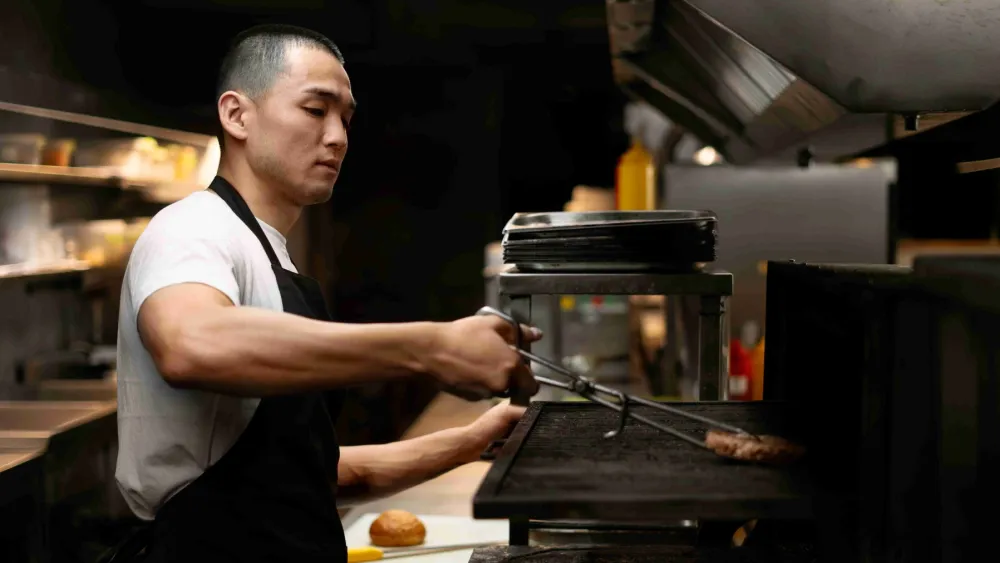
Instead of spending heavily on décor, Tuli said restaurants should make food preparation more visible through open kitchens and chef counters.
Texier also recommended dedicated collection areas, noting that 72% of consumers value spaces that let them enter and leave quickly.
Gerald Li, co-founder of Leading Nation HK Ltd., said mid-sized operators should focus on what differentiates them rather than copying larger competitors.
“You should define, not replicate,” he said in a call.
Li cited The Diplomat, part of the group's portfolio, as an example, noting that it has kept the same burger recipe for more than six years.
“Success does not come from chasing trends,” he said. “It comes from consistency.”

















 Read Here
 Advertise
 Sign Up