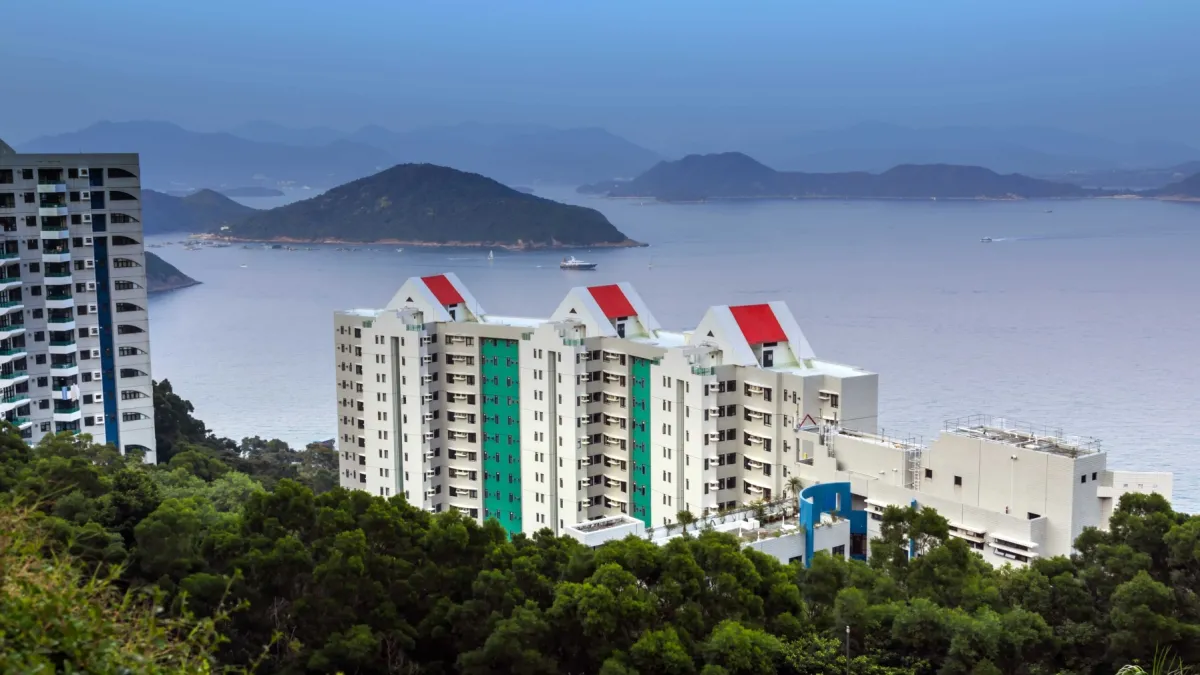
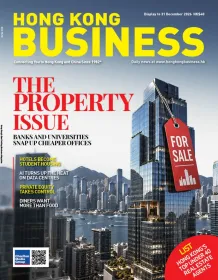
Hong Kong investors turn hotels into student housing
Office deals also rise as companies seek larger spaces for their own use.
Hong Kong property investors are targeting hotels and office buildings for conversion into student housing as the city’s accommodation shortage is set to nearly double within four years.
The shortage is projected to reach 147,200 beds by the 2029-2030 academic year from 76,300 in 2025-2926, according to a June report by Jones Lang LaSalle Ltd. (JLL). About 16,300 beds were in the pipeline as of end-April.
Tom Ko, executive director and head of capital markets for Hong Kong at Cushman & Wakefield (HK) Ltd (C&W), said buyers are focusing on quality and strategic value, whilst end-users favour premium, well-located assets.
“The accommodation sector is a key growth area,” he said in an emailed reply to questions, citing government “academic town” initiatives and demand for living space.
China Resources Longdation Company Ltd. bought Hotel COZi Oasis in Kwai Chung for $953m in March to convert the 583-room property into student housing with about 900 beds.
Large nonresidential property transactions worth more than $100m reached $23.2b in the first half, up 84% from a year earlier, C&W data showed. The increase reflected more companies buying premises for their own use and investors seeking properties they can repurpose.
Office transactions are also expected to remain active as companies buy premises for their own use, said Antonio Wu, head of capital markets for Greater China at Knight Frank Hong Kong Ltd.
Lower property values are allowing owner-occupiers, mainland companies, and institutions to secure bigger, higher-quality spaces, Wu said.
Office transactions rose to 297 in the second quarter from 271 in the first, although their total value fell to $4.16b from $4.86b, according to Rating and Valuation Department data cited by Knight Frank.
The University of Hong Kong bought an entire office building on Connaught Road West for $4b, whilst DBS Bank (Hong Kong) Ltd. acquired six full floors at The Center in Central for $2.62b.
“The wider implication is a selective recovery of well-located assets with scale, strong specifications or strategic relevance,” Wu said.
The recovery remains concentrated in Central and other established business districts, supported by demand from initial public offerings, wealth management, and financial services. Occupiers in nonfinancial industries are expected to remain cautious, he added.
Residential buyers are also placing greater weight on efficient layouts, building management, and long-term liveability, said Letizia Casalino, executive director at Okay Property Agency Ltd.
“It's shifted from ‘How much will this appreciate?’ to ‘How well does this actually serve my life today?’” she said in an emailed reply to questions. “At the top end, privacy and exclusivity remain paramount.”
She expects the mass- to mid-market homes to drive residential activity, helped by the higher threshold for the $100 flat stamp duty, which was raised to properties worth as much as $4m from $3m in February 2025.
The higher stamp duty on properties worth more than $100m is unlikely to deter luxury buyers, said Koh Keng-Shing, CEO and founder of Landscope Realty Ltd.
“What matters more is whether the property is the right product for them,” Koh told Hong Kong Business via Zoom.
Chinese buyers make up most of the luxury segment, whilst more than 60% of buyers he encounters work in financial services, he said.
Interest rates remain the biggest risk for luxury property transactions, Koh said, whilst the segment also depends on whether Hong Kong’s economic growth broadens beyond financial services.















 Read Here
 Advertise
 Sign Up