
Private banks must prove advisory value as fintech and AI undercut prices
Banks must recognize clients’ independence and raise advisory value.
Artificial intelligence (AI) and fintech companies have eroded the value of private banking services to customers, putting pressure on banks to demonstrate the value of their advisory services to customers.
Fintechs have made it much easier to invest in high-touch products that are originally only accessible through private banks, and at lower prices, said Silvio Struebi, partner and head of APAC financial services at Simon-Kucher.
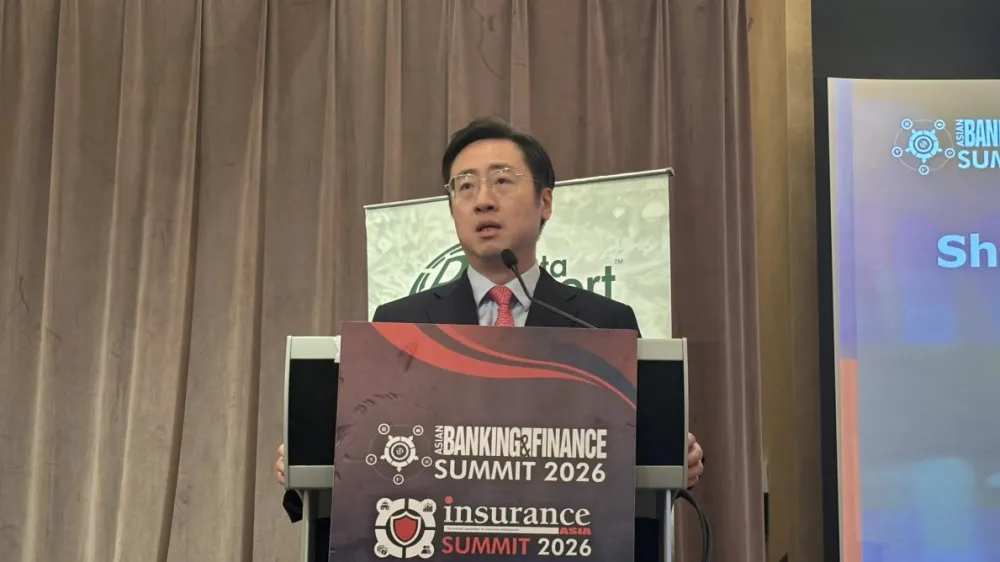
Clients nowadays also use AI, and can do their own benchmarking, Struebi told attendees of the Hong Kong leg of the ABF IA Summit 2026, 5 November.
“The clients go to the advisors, they challenge them, and then very often it's very difficult for them to answer the question,” Struebi said.
Struebi says that the opportunity for private banks lies in recognizing their clients’ independence as brought about by AI.
“Value creation will go outside of the vanity. Will have more independent platforms, tools that clients use for their own investment,” Struebi said.
Private bankers will act more like validators on what they may do with their own tools or in making financial decisions, Struebi said.
Struebi said that private banking advisory should be presented as a more bespoke part or advisory, or higher tier service.
Advisors are likely to help customers more with wealth planning, retirement gaps, or pension gaps, rather than advising about products, he said.
“When we look at that strategic direction, what it is is actually building trust, putting humans in the center, and helping them with the overarching orchestration of their wealth, with wealth planning, not with pure product-related advice,” Struebi said.
Struebi advised banks to review the margins of their product offerings as customers’ investment interests shift. For example, he foresees future investment allocations to feature more ETFs but advised banks not to immediately replace their products right away.
He also advised banks to review metrics for relationship managers, and not just to rely on product sales or new funds.
“Clients simply won't pay anymore for different things they are not using,” Struebi said.
Struebi sees the future of wealth advisory as having a modular product structure with wealth planning AI companions, where customers can pick and choose the services to use.




















 Read Here
 Advertise
 Sign Up