Hong Kong’s surprise tender cancellation raises red flags for investors: CBRE
The decision was compared to a similar incident in 2021, when the government withdrew the sale of Tsing Yi Town Lot No. 200 due to its temporary use as a quarantine facility.
Hong Kong's recent decision to cancel a tender just days before its deadline has raised concerns within the real estate and investment sectors, according to CBRE.
Industry experts are questioning the government's last-minute move, which has left several investors who had already committed resources to the tender in uncertainty. Hannah Jeong, Executive Director at CBRE Hong Kong, highlighted that the unclear reasoning behind the cancellation could send a negative signal to the market.
She compared the recent decision to a similar incident in 2021, when the government withdrew the sale of Tsing Yi Town Lot No. 200 due to its temporary use as a quarantine facility.
Whilst that decision was understood due to public health needs, Jeong noted that the current situation appeared to be of a different nature. She emphasized that clarity and consistency in land resource management are vital to maintaining investor confidence and ensuring a stable market environment.
In addition to the tender cancellation, the government has announced revised plans for industrial developments in Hung Shui Kiu and Yuen Long to address current market conditions. Samuel Lai, Executive Director at CBRE Hong Kong, explained that the overall warehouse vacancy rate has reached 10%, prompting the government to adjust its strategy to avoid market oversupply.
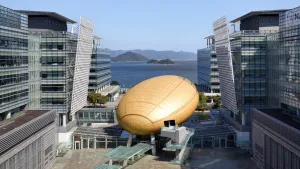
Yuen Long Town Lot No. 545, located within the Yuen Long InnoPark, will be handed over to the Hong Kong Science and Technology Parks Corporation. This decision aims to ensure more cohesive development and management, as the Corporation already oversees nearby buildings.
Meanwhile, the Hung Shui Kiu and Ha Tsuen Areas 39A and 39B site, covering over 4.1 million sq. ft., will now be managed by a government-led company that will operate it as an industrial park. Lai supported this approach, noting that it mirrors the development model used in industrial estates and is a feasible solution in response to market conditions.













 Read Here
 Advertise
 Sign Up