Central vacancy falls as financial firms add space
The trend is likely to continue this year.
Hong Kong’s office market remains under pressure, but signs of tightening are emerging in the city’s most sought-after Central buildings as financial firms expand and consolidate space, according to property advisers.
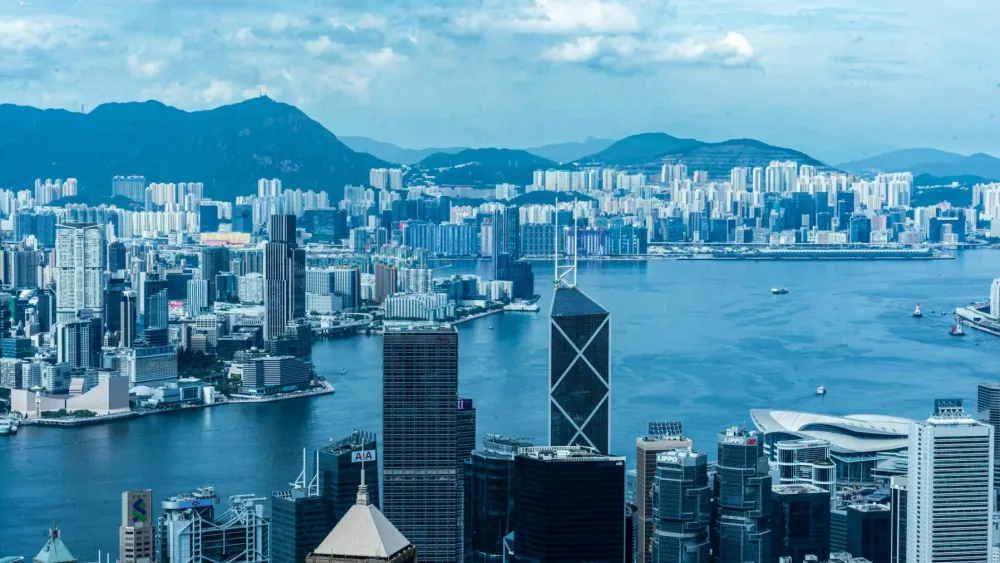
Vacancy in Central had fallen to 11.8% by November from 13.6% at the end of 2024, Ada Choi, head of Asia-Pacific research at CBRE, told Hong Kong Business. Availability in top-grade Central offices with harbour views dropped below 10%, pointing to a shrinking pool of prime space.
The improvement reflects a shift in occupier behaviour. After years of downsizing and cost-driven relocations, some tenants are moving into selective growth. Choi said early signs of expansion are appearing in Central, led by financial firms with direct exposure to capital markets.
“In terms of demand, it’s mainly from nonbank financial service firms as Hong Kong’s initial public offering pipeline remains strong,” she said in an emailed reply to questions. “This will continue to be the trend in 2026.”
The scale of these occupiers means even modest growth can have an outsized effect. Sam Gourlay, head of office leasing advisory at Jones Lang LaSalle Inc. (JLL), said insurers remain among the city’s biggest tenants, with several occupying more than one million square feet.
A 10% expansion target for some insurers in 2026 would translate into meaningful net absorption, he said in an emailed reply to questions.
Quantitative trading firms are also playing a growing role. Gourlay said these funds are the main driver of demand, with many expanding their Hong Kong footprint faster than in Singapore. JLL has advised on several cases where these firms are growing two to three times more in Hong Kong than elsewhere in the region.
Quality is a key factor shaping leasing decisions. Tenants are prioritising well-connected buildings that can serve as flexible work hubs for staff. Trophy assets with strong transport links are outperforming, Gourlay said, whilst demand for secondary offices remains weak.
The resilience in Central contrasts with softer conditions across the wider market. Hong Kong had posted a 5.1% year-on-year decline in office rents as of the third quarter of 2025, according to CBRE, whilst Singapore posted growth of 2.1%. Choi said further rental declines of up to 5% are possible in Hong Kong, led by decentralised areas where about 70% of vacant space is located.
Central is likely to fare better. She said rents in the core district could stabilise as leasing demand improves, even as pressure persists elsewhere.
Comparisons with Singapore have become more frequent as rental gaps narrow, but Gourlay cautioned against drawing simple conclusions. Office location decisions are driven by talent, market access and business strategy, not rents alone.
Even so, Grade-A offices in Central remain about 20% more expensive than comparable space in Singapore, he said, adding that the gap might be close to its narrowest point.
Investor and occupier sentiment continues to diverge. “International institutional investors are having higher interest in Singapore than Hong Kong,” Choi said, citing stronger fundamentals, political stability and lower interest rates.
Occupiers, however, still see advantages in both cities, and Hong Kong is no longer facing an outflow of regional executives. Talent policy is also supporting demand. Choi cited Hong Kong’s relatively open approach to attracting young overseas professionals.
Still, the outlook depends heavily on capital markets. Gourlay said much of the recent improvement is tied to Hong Kong’s strong initial public offering activity in 2025. Any slowdown in listings or a shift in global attention to other markets could weaken momentum in the office sector again, he added.
















 Read Here
 Advertise
 Sign Up