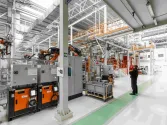
Hong Kong builders face cost hurdles in low-carbon push
Electric machinery and sustainable materials are scarce and costly.
Hong Kong building contractors face hurdles adopting a carbon-labelling scheme as high upfront costs slow implementation.
“Some of the biggest obstacles are the initial investments required for new practices and technologies,” Johnny Cheuk, senior vice president and Hong Kong executive leader at infrastructure consultancy AECOM, told Hong Kong Business.
“Small consultants need to pay upfront investment costs when they are on a steep learning curve adopting new practices or technologies to upskill their people,” he said via Zoom. “These upfront costs are obstacles for smaller-sized consultants.”
Felix Chan, digital sustainability leader for East Asia at Arup Group Ltd., said low-carbon concrete and high-recycled-content rebar carry premium prices, raising project costs.
“Use of low-carbon concrete and recycled materials is improving and increasingly integrated into BIM (building information modelling) workflows,” he said in a separate Zoom interview. As adoption rises, prices should drop, he added.
Supply-chain limits further slow uptake. Cheuk and Chan noted that low-carbon concrete, recycled rebar, and electric machinery remain scarce, lengthening lead times.
“The readiness of the entire supply chain or ecosystem is very important,” Cheuk said, noting that If part of it is unfamiliar with these measures, progress slows.
The scheme requires technical adjustments. Contractors must retrain staff, adapt workflows, and integrate digital platforms and BIM frameworks. These tools allow data-driven monitoring, improving efficiency and reducing errors, Chan added.
Some low-carbon materials and machinery need government recognition before use, adding another layer of complexity.
Despite these hurdles, analysts said the programme offers long-term gains. Chan said it strengthens a contractor’s brand and shows commitment to cutting emissions.
Cheuk added it sets benchmarks for green investments and could help firms access Environmental, Social, and Governance-focused financing.
Certification also sparks low-carbon innovation across projects. Data-driven site management cuts waste and lowers emissions, Cheuk said.
Carbon reduction potential is significant. Chan estimated the scheme could initially cut construction emissions by more than 35%, rising above 40% as adoption spreads.
Cheuk cited projects with reductions from 22% to 60% using modular integrated construction approach and S690 high-strength steel.
The programme’s success hinges on supply chain collaboration, government support, and gradual tech adoption to offset upfront costs, Cheuk said.
Both analysts see it as a first step toward standardising low-carbon practices, setting industry benchmarks, and aligning Hong Kong’s construction sector with global decarbonisation targets.
















 Read Here
 Advertise
 Sign Up