Cathay, Google test AI to cut warming impact of aircraft trails by 40%
The second-phase will expand tests across Asian and transpacific routes.
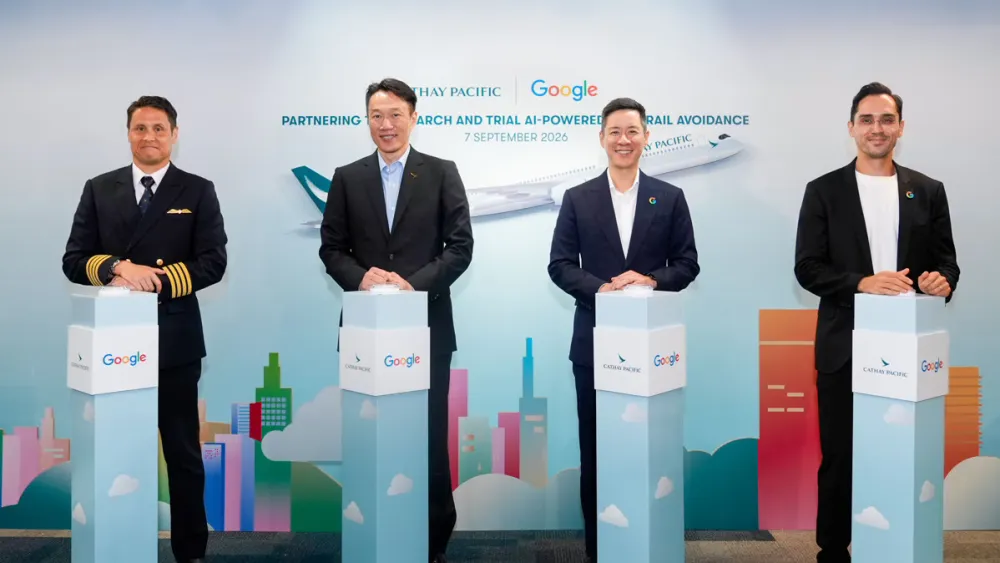
Cathay Pacific and Google are testing artificial intelligence (AI)-powered contrail avoidance technology across the airline’s global network, with early trials estimated to have reduced the warming impact of the trails by about 40%.
The partners are moving into a larger second phase of flight trials covering the airline’s Asian and transpacific network to gather more real-world operational data.
The expanded tests are expected to provide additional data on the operational feasibility of contrail avoidance and support further research.
The operational trial began in late 2025 and is targeting more than 100 Cathay flights, with over 80 flights so far following contrail-avoidance routes.
Google’s system combines predictive models, satellite imagery, and weather data to forecast areas where persistent contrails are likely to form, allowing flight dispatchers and pilots to consider altitude adjustments.
The airline provides the forecasts to pilots through its in-house Electronic Flight Folder system, which uses in-flight Wi-Fi connectivity alongside real-time operational data.
Contrails form when aircraft fly through cold and humid conditions at high altitude. Persistent trails can spread into cloud formations that trap heat in the atmosphere.
Moreover, research cited by both companies suggests persistent contrails could account for around one-third of aviation’s total climate impact.






















 Read Here
 Advertise
 Sign Up