Digital money could double Hong Kong’s fund industry, report says
Investors were largely indifferent between different forms of regulated digital money.
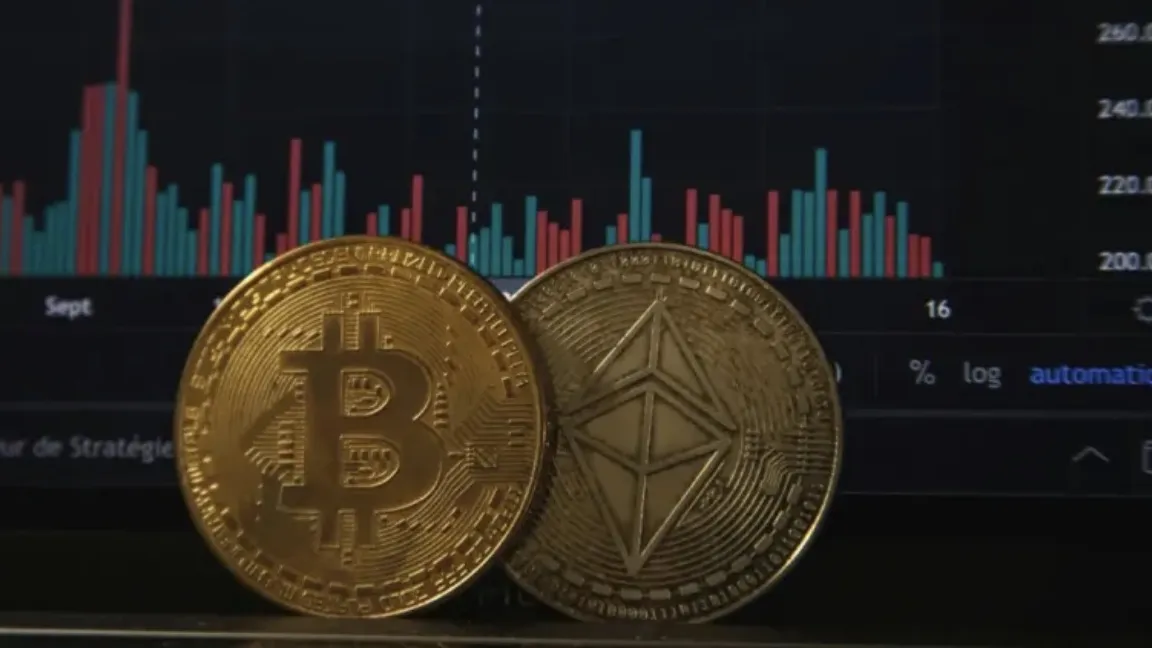
Digital money and tokenized assets could significantly expand Hong Kong’s fund industry, potentially doubling its size.
According to a joint report by Boston Consulting Group (BCG), Aptos Labs and Hang Seng Bank, global finance is moving away from traditional message-based systems towards token-based infrastructure, in which money and assets are issued and settled directly on blockchain networks.
Under this model, ownership, compliance and settlement are embedded into digital tokens, enabling near-instant transactions and reducing operational friction.
The report said digital money, including stablecoins, tokenized deposits and central bank digital currencies (CBDCs) is the first large-scale application of this shift.
By November 2025, the market capitalization of fiat-pegged stablecoins had exceeded US$300b, whilst more than 130 central banks were exploring or piloting CBDCs. Major banks have also begun issuing tokenized deposits to improve settlement efficiency.
Attention is now extending beyond payments to capital markets. The value of tokenized funds grew from around US$2b in 2024 to more than US$8b in 2025, according to the report, whilst the broader tokenized asset market reached approximately US$30b by September 2025.
Bonds and funds currently account for the largest share, with tokenization also expanding into commodities, private credit and, more recently, equities.
To assess real-world viability, BCG, Aptos Labs and Hang Seng Bank participated in Phase 2 of the Hong Kong Monetary Authority’s Project e-HKD+ pilot programme.
The pilot tested the use of programmable digital money—based on a hypothetical e-HKD—to settle tokenized fund transactions on a public-permissioned blockchain.
The trial demonstrated that instant settlement, atomic transactions and embedded compliance controls could be achieved whilst meeting institutional requirements for performance, privacy and governance.
Following the pilot, a survey of 500 retail investors in Hong Kong and the Chinese Mainland found strong demand for token-based investment features.
Nearly all respondents expressed interest in capabilities such as instant settlement, 24/7 access and greater transparency. About 61% said they would double their fund allocations if such features were available.
The survey also indicated that investors were largely indifferent between different forms of regulated digital money—whether CBDCs, tokenized deposits or stablecoins—provided they delivered similar functionality.
The report concludes that all three forms of digital money can support tokenized fund use cases. As regulated stablecoins and tokenized deposits mature, retail demand for a CBDC may be limited, particularly if private-sector digital money is well regulated and widely adopted.
To unlock broader adoption, the report identifies three priorities: scaling interoperable and privacy-preserving blockchain infrastructure, continuing regulatory harmonisation, and developing new business models that leverage programmable digital money.
If these steps are executed in coordination, Hong Kong could establish itself as a global benchmark for regulated on-chain finance whilst driving significant growth in its fund industry.


















 Read Here
 Advertise
 Sign Up