HKPC to scale up low-altitude economy with drone centre
Government agencies can tap pooled drone services through a shared platform.
The Hong Kong Productivity Council (HKPC) opened its Unmanned Aircraft Operation Management (UOM) Demonstration Centre on 17 November, showcasing interim results of a shared platform tested under the Low-altitude Economy Regulatory Sandbox X.
HKPC organised the event with the government’s Working Group on Developing the Low-altitude Economy, with support from the Digital Policy Office.
The opening comes in the first year of the National 15th Five-Year Plan, which treats the low-altitude economy as a strategic emerging industry and a key way to cultivate new productive forces.
Hong Kong’s first Five-Year Plan proposes making the city a hub for low-altitude applications and coordinating cross-border logistics in the Guangdong-Hong Kong-Macao Greater Bay Area, whilst the 2026 Policy Address calls for further development of the sector’s ecosystem.
HKPC said the Multiple Applications/Users Shared Platform is one of the sandbox’s key testing areas. It serves different departments whilst testing application solutions and ways to coordinate low-altitude flight resources, to gather experience for scaling up later.
The centre uses a “One-Network Unified Flight” model, pooling hardware, software and services from different technology suppliers to provide standardised drone services based on departmental needs. HKPC said this spares departments from duplicating equipment and systems.
The centre also uses artificial intelligence (AI) analytics, automated drone docks, intelligent route planning and real-time data processing.
Under a “one flight, multiple applications” approach, data from one mission can be analysed and used by other departments, subject to their needs and authorisation.
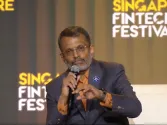
HKPC chairman Sunny Tan said the centre is “more than a technology exhibition platform” and a step towards shared, large-scale drone applications.
HKPC said the government is working with relevant Mainland authorities on cross-border low-altitude logistics projects, including route planning, customs clearance and infrastructure.
It said the centre’s experience in cross-platform coordination, data interoperability and task management would provide a practical base for cross-border applications.

















 Read Here
 Advertise
 Sign Up