SME index rises to 44.8 despite weaker global sentiment
Profit margins and business conditions reached their highest levels of 2026.
The Standard Chartered SME Leading Business Index rose 0.7 points quarter on quarter to 44.8 in the fourth quarter of 2026, marking its second consecutive quarterly increase as business conditions and profit margins reached their highest levels this year.
The Business Condition sub-index increased 1.8 points to 42.3, whilst the Profit Margin sub-index rose 2.1 points to 39.9, according to survey results released by the Hong Kong Productivity Council (HKPC) on 22 October.
However, the Global Economy sub-index fell 1.6 points to 31.5, indicating continued caution amongst small and medium-sized enterprises (SMEs) about external economic conditions.
“The increase was mainly supported by improvements in the near-term outlook for sales and profit margins, whilst investment sentiment rose, pointing to an increase in confidence on the long-term outlook,” said Tommy Wu, Senior Economist for Greater China and North Asia at Standard Chartered.
Wu said Hong Kong’s external trade activity continued to benefit from the global artificial intelligence (AI) supercycle.
The Import/Export Trade and Wholesale industry index rose for the second consecutive quarter, gaining a cumulative 3.4 points to 42.8, its highest level in two years.
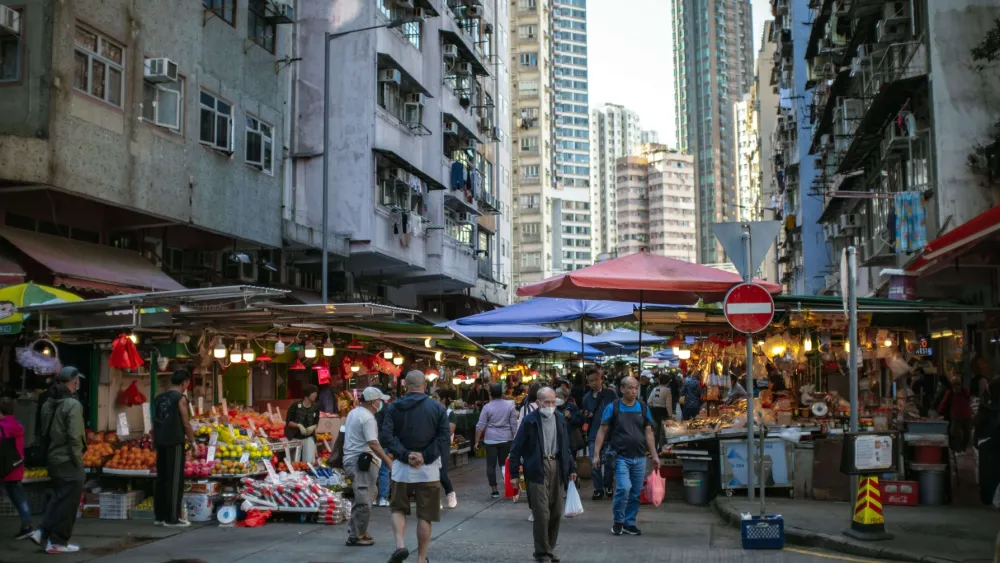
Rising business and entertainment events, alongside the continued recovery in inbound tourism, also boosted confidence in the Retail and Accommodation and Food Services industries.
In Accommodation and Food Services, both the Business Condition and Profit Margin sub-indices rose 11.7 points. In Retail, the corresponding measures increased 5.8 and 5.3 points, respectively.
Wu added that record initial public offering fundraising in the first three quarters of 2026 had supported the financial and professional services sector.
“Whilst sentiment in the ‘Real Estate’ industry has softened, market outlook in the ‘Construction’ industry has shown modest improvement,” he said, adding that the planned Northern Metropolis development could provide further support to business confidence.
Investment sentiment improved by 0.8 points to 50.8, remaining above the neutral 50-point mark. Recruitment sentiment edged down 0.4 points to 50.1, staying broadly stable.
Cost pressures also eased. The proportion of SMEs expecting raw material costs to increase fell 11 percentage points (ppt) to 53%, marking a second consecutive quarterly decline.
Meanwhile, the share anticipating salary increases dropped 3 ppt to 14%. The proportion planning to raise product or service prices edged up 1 ppt to 20%.
The survey also examined cross-border business plans. Around 32% of surveyed SMEs were already conducting cross-border business or planned to expand within the next year.
The Chinese Mainland was the preferred destination for 49% of SMEs planning expansion, followed by Asian markets at 42%.
Digital tools were also a priority for firms operating across borders, with more than 90% of these SMEs saying they wanted to leverage such tools. Social media marketing, cross-border payment and remittance platforms, and AI tools were amongst the most commonly used.
“More SMEs are viewing cross-border business as an important strategy for reaching new customers and diversifying market risks,” said Karen Fung, Chief Marketing Officer at HKPC.
Fung added that digital tools were becoming important not only for operational efficiency but also for market expansion and business decision-making.
The survey interviewed 820 local SMEs in August and September, with an additional 24 SMEs operating in other Greater Bay Area cities included as booster samples for further analysis.
















 Read Here
 Advertise
 Sign Up