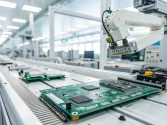
Capital deepening integral to Hong Kong's medium-term growth
The government's efforts are very encouraging.
As part of an assessment of Hong Kong's medium-term growth, capital deepening was singled out as being the factor that will emerge as a key growth driver.
According to a research note from Hang Seng Bank, capital accumulation for Asian economies fell precipitously over the 2000-2010 decade.
In fact, the report said, there is a natural trend for capital spending to slow as the need for physical investment declines when economies move into services and away from manufacturing. A similar decline in capital accumulation took place in Hong Kong, albeit for different reasons.
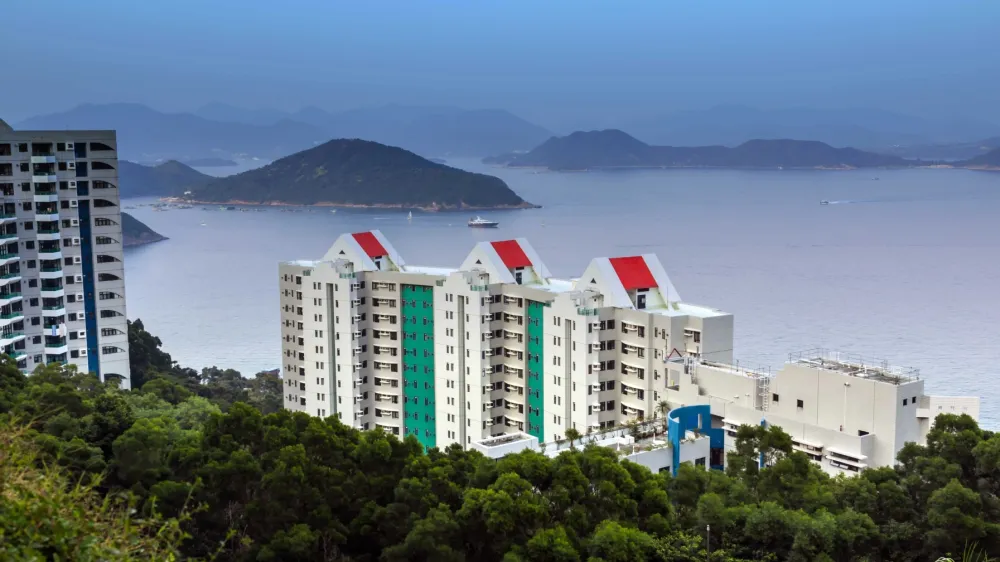
The decline in capital spending in the city was significantly exacerbated by an idiosyncratic factor related to changes in housing policy in the 2000s. Since 2010, the government has started to shift its housing policy focus to address the supply shortage.
Hang Seng Bank noted that it is encouraged by the government’s efforts to increase the number of buildable sites.
Here’s more from Hang Seng Bank:
With almost 40% of all investment in Hong Kong taking place in the housing sector, it offers a direct contribution to the deepening of the city’s capital stock and spurs other fixed investment to take advantage of the cheaper residential and rental space available. We are confident that the increase in capital growth seen since the 2008 crisis will continue.
Substantial potential for productivity gains. Unlike other factors, technological progress is quite volatile and not easy to anticipate.
In fact, the typical growth accounting framework is unable to shed more light on total factor productivity (TFP) growth as TFP is essentially a residual of the equation.
Given this reality, we employed a quantitative model of TFP dynamics, with US productivity growth and the relative income ratio between Hong Kong and the US as independent variables.
The basic idea is that we see technological advancement in Hong Kong as a process of catch-up to the technical frontier, which we take to be the US.
Assuming a steady trend productivity growth in the US, our model suggests TFP growth in Hong Kong could contribute 1.7 percentage points to annual GDP growth across a five-year horizon.
It is our contention that the contribution of technological changes could deliver sizeable benefits for the city’s economy in the coming period.














 Read Here
 Advertise
 Sign Up