
Reinsurance beyond borders: How Hong Kong can strengthen Asia’s risk-sharing architecture
By Sajja Praveen ChowdaryIt is both a gateway for foreign reinsurers entering Asia and a launchpad for Asian insurers looking to access global capacity.
It is commonly said that risk sharing is everyone’s business in the insurance world. True as that may be, the buck often stops with the reinsurance sector.
It is this industry that bears the weight of the entire risk-sharing ecosystem and, in turn, protects insurers when the biggest claims come knocking. Right from hurricanes in the Philippines to typhoons in Japan, and pandemic-era health claims to billion-dollar property losses — reinsurers are the shock absorbers of modern economies.
And yet, even now Asia remains underprotected. The region contributes nearly one-third of the world’s economic losses from natural disasters but accounts for only a fraction of global reinsurance capacity. A strong cross-border risk-sharing mechanism ensures that a disaster doesn’t set back years of progress. This is why Hong Kong is such an important piece of the puzzle, for it’s the financial centre with the capital markets, regulatory depth, and international credibility to become Asia’s hub for reinsurance and resilience.
Decoding Asia’s protection gap and vulnerabilities
Despite the rise of insurance adoption in Asia, the protection gap remains huge. In 2024, Asia’s health and life protection gap reached an estimated US$390b ($493b). This essentially translates to millions of households being financially vulnerable in the face of medical emergencies and even loss of lives. Now, add the recurrence of natural disasters in Asia and the situation gets magnified multifold. Catastrophic floods, cyclones, and earthquakes continue to cause massive economic losses.
However, the data paints a rather bleak picture with only a fraction of those losses being covered by insurance. Often, this means that the governments and individuals end up shouldering the cost.
Between 2000 and 2023, Asia-Pacific countries suffered average annual losses of about US$48.4b ($61b) from natural hazards like floods, cyclones, and earthquakes, according to the Organisation for Economic Co-operation and Development (OECD). In 2024 alone, the region witnessed around US$91b ($115b) in total economic losses due to natural catastrophes, but around US$16b ($20b) of that was insured.
Why Hong Kong is an important piece of the puzzle
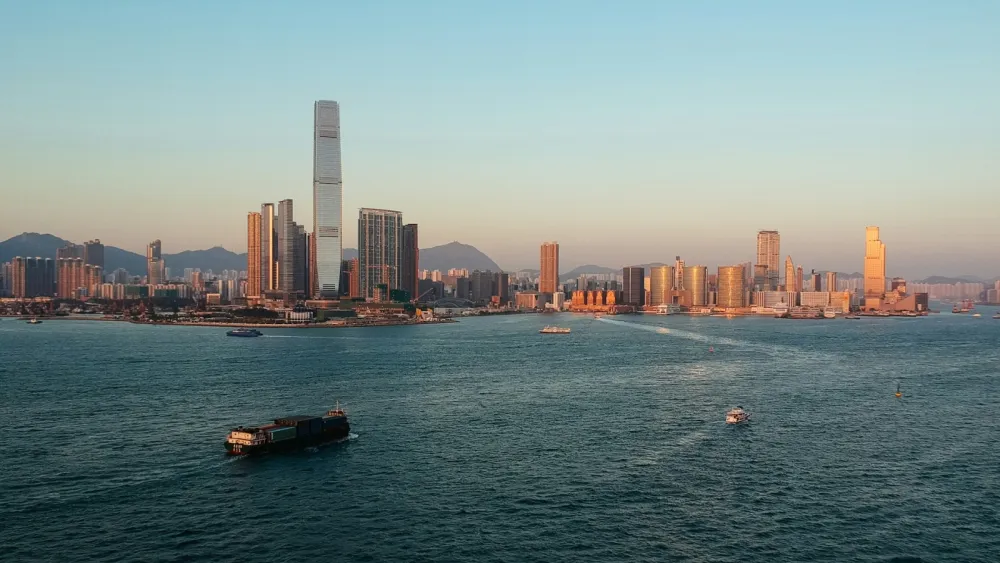
Hong Kong enjoys structural strength with its deep capital markets, sound legal systems, and its location at the crossroads of East and West. It acts both as a gateway for foreign reinsurers entering Asia and as a launchpad for Asian insurers looking to access global capacity.
Also, in 2024, Hong Kong implemented its long-awaited Risk-Based Capital (RBC) regime, aligning its insurance regulatory framework with international best practices. The new rules require insurers to hold capital in proportion to their risk profile, which is a crucial step in building a stable, globally credible insurance market.
This change couldn’t have come at a better time. Hong Kong’s insurance sector is expanding steadily. The city is already a significant player in inward reinsurance, and with the new RBC regime, it has signaled its readiness to become Asia’s reinsurance hub.
Beyond regulatory alignment, Hong Kong offers tangible incentives. With a concessionary tax rate of 8.25% for professional reinsurers and captive insurers, the city is aggressively positioning itself as the most capital-efficient domicile for global insurers to centre their Asian operations.
This can also open up doors for new instruments such as catastrophe bonds and insurance-linked securities or ILS. The government’s recent extension of the Pilot ILS Grant Scheme to 2028 is a clear signal of support, which lowers the issuance costs for issuers looking to list here. These financial innovations can help channel global capital into managing local risks whilst reducing dependence on traditional reinsurance capacity alone. They also create an avenue for institutional investors to participate directly in risk transfer. This will help broaden the pool of capital available to absorb large-scale losses arising from natural catastrophes and other systemic events.
Reinsurance — the ultimate public good
Unless we have stronger risk-sharing mechanisms, many Asian economies will remain exposed to recovery costs that can strain public finances. Not just that, it also stands to delay rebuilding the infrastructure and weaken long-term investment confidence after a disaster strikes.
Reinsurance — the insurer’s insurance — is what makes it possible to distribute these risks more broadly. This ensures that local crises don’t turn into macroeconomic shocks. When the 2011 earthquake struck Japan, the losses ran in billions, but the global reinsurance capacity ensured the country’s insurance market didn’t collapse.
Reinsurance helps countries develop resilience through financial hedging. By spreading risk beyond borders, economies are protected from shocks, and recovery becomes faster and fairer.
For Asia, where events such as Japan’s 2011 earthquake and tsunami, recurrent flooding across South and Southeast Asia, and increasingly costly typhoon seasons continue to generate significant economic losses, a stronger reinsurance framework is essential. With cross-border collaboration and capital market depth, Hong Kong can help build a risk-sharing architecture to cushion the blows of tomorrow’s disasters and safeguard the region’s collective growth story.
As Asian enterprises expand their global footprint, so do the scale and complexity of their risks. Hong Kong’s reinsurers hold a unique position to underwrite these large-scale international projects, exporting resilience alongside capital.
The role of reinsurance for the end consumer is paramount. When floods or storms happen, more insurance claims will be paid out quickly, so people don’t lose everything.
Governments will be under less strain rebuilding after disasters, which means less debt or tax increases after bad weather years. Also, insurance markets can bring more job creation, investment in infrastructure, and maybe even cost-effective insurance over time as risks are spread more widely.



















 Read Here
 Advertise
 Sign Up