Hong Kong caps commissions as life insurers compete
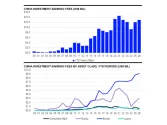
Mainland visitor demand rebounded strongly in 2025 despite tighter cross-border fund controls.
Hong Kong's life insurance sector maintained strong growth in 2024 and 2025, supported by demand from Mainland Chinese visitors (MCVs) and a growing domestic customer base.
The research firm said demand from MCVs rebounded strongly in 2025 and expects the direct impact of recent Mainland China restrictions on cross-border fund flows to remain limited, according to CreditSights.
CreditSights said several regulatory changes are reshaping the market.
These include a 6% cap on illustrated returns for Hong Kong dollar participating policies from 1 July 2025, a 70% cap on first-year agent commissions and a 50% ceiling on broker referral fees.
It said insurers with established agency and bancassurance networks, longer-duration policies and stronger distribution quality are likely to benefit from the new rules.
The report also highlighted changes to Hong Kong's solvency framework. The risk-based capital (RBC) regime became fully operational on 1 July 2024, replacing the previous Solvency I model with a three-pillar framework based on a one-in-200-year stress scenario.
CreditSights said the new regime is encouraging insurers to adjust their investment portfolios by increasing exposure to higher-quality fixed-income assets and strengthening asset-liability management to improve capital efficiency.
The Insurance Authority is also introducing preferential capital treatment for qualifying infrastructure debt and equity investments.
Under the framework, eligible Category A assets in Hong Kong and mainland China will receive lower stress factors in RBC calculations, with additional incentives for Hong Kong dollar-denominated government infrastructure bonds.
Meanwhile, CreditSights said mainland China's life insurance sector continues to face pressure from declining long-term government bond yields, which have widened asset-liability mismatches for products offering guaranteed returns.
The firm said insurers are responding by reducing risk.
It cited Prudential's CPL business shifting from non-participating to participating products, whilst AIA has repriced long-term savings products and expanded higher-margin protection business.

























 Read Here
 Advertise
 Sign Up