Retail loyalty shifts to recognition amidst data hurdles
Earn-and-burn incentives are expensive to run as AI promises hyper-personalised offers
Loyalty is shifting from points to recognition, but fragmented customer data is slowing some retailers, panellists said at the Retail Asia Summit 2026 in Hong Kong.
Eileen Tang, head of digital business at Hong Kong Maxim’s Group, said loyalty in food and beverage is “less about connecting points” and more about making customers feel recognised.
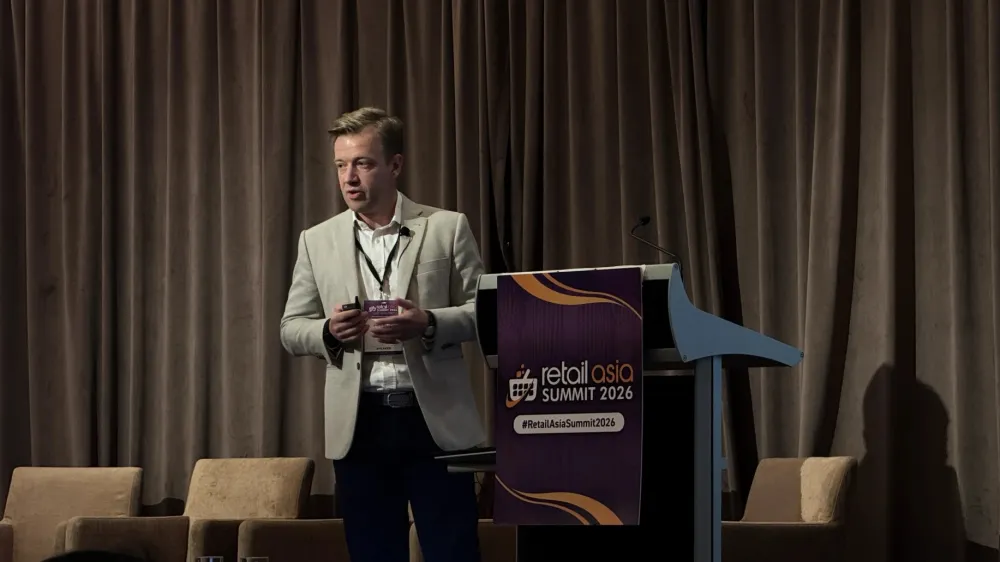
The panel was moderated by Waldemar Jap, partner at Oliver Wyman, who noted that malls, restaurants and retailers in Hong Kong each offer an app, adding that earn-and-burn incentives are expensive.
OnTheList co-founder Diego Dultzin said its best customers visit 15 to 20 times a year, so the aim is to reward them and make them ambassadors for OnTheList. He said early access to brands is what these customers asked for most.
Tang said many consumers head north and spend more in the Greater Bay Area (GBA), so the challenge is rewarding customers to spend in Hong Kong.
Maxim’s is building loyalty that works both ways across the border, encouraging Hong Kong customers to dine at its GBA restaurants and mainland customers to visit Maxim’s in Hong Kong.
The group is revamping its traditional Chinese restaurant formats, she said.
Data remains a constraint for Maxim’s, which runs several customer relationship management systems across its more than 60 brands, Tang said.
The group wants “one Maxim’s ID” for each customer, which she called key to consolidating data from digital touchpoints.
She said consolidated data would allow “more sophisticated” analytics and artificial intelligence (AI)-driven, hyper-personalised offers.
Decathlon Hong Kong chief technology officer Kent Lam said the retailer’s membership only allows gift-card redemption and is not cross-border.
Lam said Decathlon wants to explore tiered membership, as offered in other countries such as Taiwan, and links with third-party reward programmes.
OnTheList clears brands’ past-season stock through members-only sale events in 11 markets. The company has more than 650,000 Hong Kong members, and Dultzin said platforms such as Shopify have made customer data collection and integration easier.
Dultzin said OnTheList reaches Hong Kong members through WhatsApp and SMS, and uses LINE, Kakao, and WeChat in other markets, as he questioned how many people read promotional emails.
Its AI segmentation tool identifies customers likely to shop a brand’s stock and proposes pricing, which Dultzin called “a game-changer for us”.
He said the tool limits invitations, as Hong Kong has about 10 online events and one or two offline events weekly, and inviting everyone would mean 10 to 12 invitations a week.
OnTheList can push discounts or bundle offers mid-event if sell-through lags, he said.
Tang said Maxim’s is targeting voice-of-customer analysis using social media feedback, and smart store operations including AI and robotics in the kitchen.
Lam said Decathlon is starting to use Databricks’ Genie, which lets non-technical staff query the company’s data lake in natural language without relying on the data team.
He said Decathlon's global team is developing a chatbot that integrates with its order management system to handle order and refund queries, with deployment in Hong Kong hoped for by late 2027.
On how brands get recommended by AI assistants, Dultzin said it depends on data and press references. Lam, whose company is testing the approach, suggested that greater market share could improve visibility and speculated that brands might eventually pay AI platforms for mentions.
Tang, on the other hand, cited Dianping’s AI agent in China, which she said cannot recommend a restaurant that has not built up data on the platform.



















 Read Here
 Advertise
 Sign Up