Gov't targets mid-2030s for new rail links under GBA integration
Chief Executive John Lee unveiled plans for deeper GBA integration and green transformation.
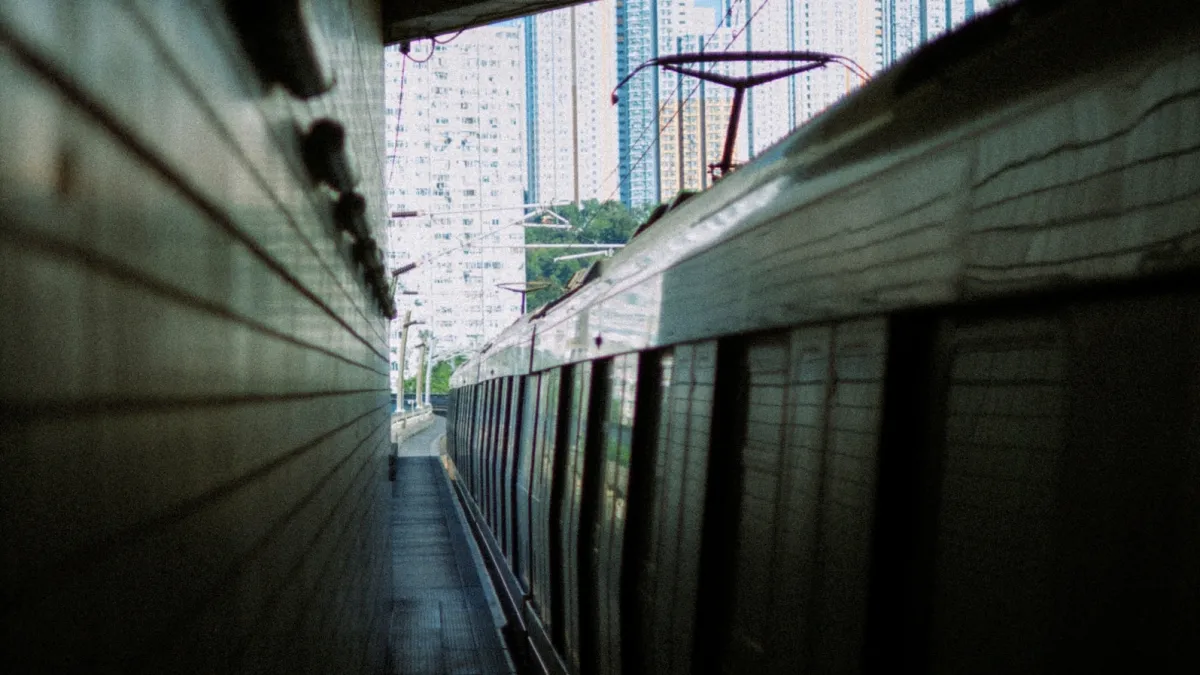
Hong Kong is targeting 2034 for the commissioning of the Northern Link Project, with the Hong Kong-Shenzhen Western Rail Link between Hung Shui Kiu and Qianhai expected to begin service in 2035.
The projects are aimed at strengthening transport and economic links across the Guangdong-Hong Kong-Macao Greater Bay Area, according to the first five-year plan for economic and social development unveiled by Chief Executive John Lee.
Lee said the government will continue to participate in major cooperation platforms including Qianhai in Shenzhen, Nansha in Guangzhou, Hengqin in Zhuhai, and the Hetao Shenzhen-Hong Kong Cooperation Zone.
It will also support Nansha's role as a gateway for international trade and encourage Hong Kong businesses to participate in infrastructure development there.
A task force will be established to explore greater alignment of rules and mechanisms within the Greater Bay Area (GBA), he added.
The government will expand cooperation between its universities and higher education institutions in other GBA cities through cross-disciplinary partnerships focused on scientific research, knowledge transfer, and commercialisation.
In terms of financial integration, Hong Kong plans to use institutional innovation, upgraded financial infrastructure, and greater regulatory alignment to facilitate the orderly flow of financial resources amongst GBA cities.
Lee said under the Agreement on Strengthening of Sports Cooperation and Promotion of Integrated Development, the government plans to co-organise important regional and international single‑sport events.
It will also strengthen cultural exchanges, pass on Cantonese opera and the characteristics of Lingnan culture, and promote the sales and cross‑boundary exhibition of Hong Kong publications.
The five-year plan also places green development at the centre to achieve carbon neutrality before 2050.
Measures include the $400m Green Tech Fund, national hydrogen energy standards, and a sustainable aviation fuel production base in Dongguan.











 Read Here
 Advertise
 Sign Up