Hong Kong
CIMB to do more investment banking in Hong Kong
CIMB to do more investment banking in Hong Kong
New strengths allow it to be more competitive.
MPF reforms to reduce fees

Better retirement protection is the goal of reforms.
China Automation warns of 2012 profit drop
OSK HK forecasts a 5% net profit decline.
Beware: Government warns of two fraudulent websites

Both pretend offering financial services.
Fujikon profits almost doubled in 3Q12
Net profit margins up 8.1%.
HTC's first Windows 8 smartphone now available in Hong Kong
Buy a unit for only HK$4,998.
A call for Hong Kong to de-peg from USD
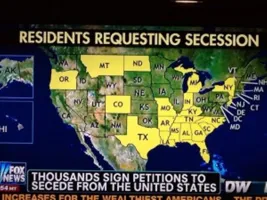
As the US continues to suffer economic difficulties stemming from their federal government’s neglect to reform domestic and foreign spending.The citizens of the US suffer from blatant abuses of their rights such as the NDAA, the TSA, etc. it is practically feasible for the “states” to withdraw from the union, and to do so would protect its citizens’ standard of living and re-secure their rights and liberties in accordance with the original ideas and beliefs of the founding fathers which are no longer being reflected by the federal government.”The call for states to secede from the union, one now backed by over a million Americans, is part of a wider disenfranchisement with how the country has been infested and hijacked by a crony political elite and the principles of the founders decimated.As over a million Americans so far have expressed their disenfranchisement with the federal government by supporting a secessionist movement that has spread like wildfire, it is time to call for a new declaration of independence and a new commitment to restore the Republic in the face of an enemy that has subverted America from within.Meanwhile, Obama supporters and other statists have called on the government to punish those putting their signatures to the secession petitions by having them stripped of their citizenship, deported and exiled.If the “states” became their own nation they could abandon the failing U.S. currency and create its own honest money system. The abandonment of the U.S. currency also means the “states” could walk away from the U.S. federal debt. This frees the “states” from an almost insufferable financial burden, allowing it to start over with a clean slate and an honest currency. Across the “states” all federal wage taxes would be eliminated, meaning that employee take-home pay would rise and the cost of hiring employees would sharply drop. This would cause a surge of business investment across the “states” as investors/employers flock to the “states” to lower their costs of conducting business in North America.The lack of any further burden to fund the U.S. Empire’s military presence in over 130 nations around the world would equal a financial windfall for the “states”, which could use the new surge in business taxes and sales taxes to fund real infrastructure: Expanded universities, railroads, airports and more. There would no longer be any need to file a federal income tax return on April 15th. This alone would vastly improve the "happiness quotient" for “We the People”. The “states” would shut down all federal offices, expelling feds as people with no authority. This would immediately end the scourge of the DEA, ATF, FDA and USDA, among other "gang-style" agencies that routinely betray the American people. Instead, the “States” would form its own local agencies to handle any necessary tasks, all with the benefit of local input and local planning. We are watching history in the making and witnessing either the fall of the modern Rome or the resurrection of the original one. If the secession should take place after a lengthy struggle on both sides, the dollar will totally collapse. And if it should fail the greenback will still collapse…on schedule according to the global elites plot.Will Hong Kong be affected? Should Hong Kong sit back and do nothing till the last minute? Who are these Hong Kong officials stubbornly against the un-peg from the greenback and why? I wonder if they are under the influence… hmmm.
Hong Kong beats Singapore in top business countries

It was third best with $244b GDP.
Ngai Lik Industrial warns of loss
It’s attributable to a one-off gain on deconsolidation of a subsidiary.
Hospital fee revisions proposed for implementation on April 1
Fees for non-eligible persons services are proposed to rise by 44.5%.
Sky100 Hong Kong Observation Deck gearing up for the holidays
A festive spectacle is featured till 2 January 2013.
Hong Kong employees' long working hours already a cause for concern

A report on the standard working hours has been released.
Buildings Department to probe problematic property issue
Removal and dismantling works will be completed ASAP.
Car theft cases plunge 30.3%

Thankfully, overall crime rose only 0.3%.
Here's what to expect from Skyworth's profit report
Net gains may surge 19%.
Finally, paternity leave for Hong Kong dads

Hong Kong fathers will get three days' paternity leave.
Take-up for offices for lease plunged 80% in 3Q12
Grade A office rents meanwhile grew 1.5% after 3 months of decline.






 Read Here
 Advertise
 Sign Up







Commentary
How Hong Kong SMEs should set boundaries for agentic AI in B2B selling
Stablecoin payments are going mainstream. Hong Kong and APAC are showing how