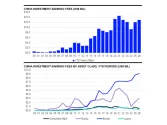
Budget surplus hits 1.5% of GDP ahead of forecast
Stock duties and profit tax boost the region’s budget.
Hong Kong’s operating account reached a surplus of 1.5% of gross domestic product (GDP) in the fiscal year (FY) ended March 2026, a year before government forecasts, according to Fitch Ratings.
The fiscal position allows tax concessions and higher infrastructure spending.
Revenue from stock-transaction stamp duties and a 17% profit tax increase supported the budget. The consolidated deficit for FY2025 reached 3.0% of GDP—excluding bond proceeds—sitting below the initial 4.8% projection.
The government projects medium-term revenue at 20% of GDP. Tax allowances and concessions will reduce revenue by 0.4% of GDP in FY2026.
A stamp duty rate increase on residential properties valued above $100m begins in FY2026. The Organisation for Economic Co-operation and Development’s Base Erosion and Profit Shifting 2.0 framework will generate $15b in annual revenue starting in FY2027.
The consolidation strategy relies on expenditure restraint in place of new taxes. Recurrent expenditure will decrease 2% in FY2026 and FY2027. Annual capital expenditure will average $120b for projects including the Northern Metropolis.
Total expenditure will decline to 21.5% of GDP by FY2030 from 24.2% in FY2026. Capital outlays remain at a high level, according to Fitch Ratings
Authorities proposed a transfer of $75b per year from the Exchange Fund to the Capital Works Reserve Fund in FY2026 and FY2027, following the Exchange Fund investment income of $331b in 2025.
The government will also transfer the $37b Bond Fund surplus and $15.8b from non-government funds in FY2026.
Average gross bond issuance will reach $194b from FY2026 to FY2030. This issuance will raise fiscal debt to 19.9% of GDP from 14.4%.
Fiscal reserves will cover 10 months of spending. The reserves-to-GDP ratio will decline to 17.3% by FY2030 from a 19.7% estimate in FY2025.
Rating risks include the erosion of fiscal buffers and a rise in the debt-to-GDP ratio. Performance depends on cyclical revenue gains without a structural broadening of the tax base.

























 Read Here
 Advertise
 Sign Up