When Treasury Secretary Tim Geithner recently visited China in a rah-rah session for the dollar—their reaction was almost appalling. In fact, while speaking to Chinese university students... he promised them that the dollars owned by their government were "very safe … and their reaction? They nearly laughed him off the stage!
When Treasury Secretary Tim Geithner recently visited China in a rah-rah session for the dollar—their reaction was almost appalling. In fact, while speaking to Chinese university students... he promised them that the dollars owned by their government were "very safe … and their reaction? They nearly laughed him off the stage!
Stepping into a Hong Kong bound Cathay Pacific airplane is like coming home; the organization is perfect, the hostesses are immaculate – and it is freezing cold onboard.
Like other major societies worldwide, Hong Kong is also transforming itself into a knowledge-based economy where increasingly firms are competing based on their leverage of collective wisdom and innovative capability of their staff and other stakeholders to design and deliver knowledge-intensive services.
The US Bureau of Labor Statistics announced that 227,000 new nonfarm payroll jobs were created by the economy during February. Is that true? Of course not!
Do you ever wonder why some business owners are so successful, while others are just scraping by, trying to make some money for a living and working very long hours?
In August 2011, Chinese Vice Premier Li Keqiang visited Hong Kong, where he unveiled plans to create an exchange-traded fund (ETF) that would allow mainland China investors to invest in stocks listed in Hong Kong.
“Corporations resemble nations in that they reflect the accumulation of past events and the shaping force of underlying genetics that have roots in prior generations.” Built to Last: Successful Habits of Visionary Companies
Hong Kong’s Causeway Bay is now the second most expensive shopping district in the world, behind New York’s Fifth Avenue and ahead of Tokyo’s Ginza, London’s Bond Street and the Champ Élysées in Paris. Of course Mainland Chinese shoppers are the driving force behind these high rents and there are often long lines of mainland tourists outside the Louis Vuitton, Burberry and Dolce & Gabanna stores, where they are (allegedly) preferred over local shoppers, much to the chagrin of many Hong Kong inhabitants.
I have far fewer concerns about a bank going under in Hong Kong than I do in the US. And in Hong Kong I can move money into gold or any number of currencies.
In recent years, both in Hong Kong and internationally, an increase in emphasis has been placed on board diversity, and, in particular, on including more women in the boardroom.
The average lifespan of a multinational (Fortune 500) company is 40 years. Of today’s Fortune 500, only 67 still exist from the first list published in 1955. Last week 133 year old Kodak filed for bankruptcy protection; in its 1980 heydays it employed 145,000 people, had great products (it even invented the digital camera) and its brand belonged to the most valuable in the world. Too slow to change to the digital world, decades of decline ended in a slow, but certain death. In a recent study that TNS conducted with CMOs of 30 multinationals about digital and marketing, the CMOs recognized the necessity of speed and change, as they mentioned the imperatives for 2012:
In Hong Kong, gone are the days when we were chained to our desk from 9 to 5. How we work is changing. The idea of a “Third Place,” a space that’s neither home nor office but where people want to spend a portion of their lives, was introduced as far back as 1989 in Ray Oldenburg’s book “The Great Good Place.”
Today’s economic climate might look uncertain at best – and grim at worst – but companies can meet the challenges of market volatility by making the right decisions and investing in their people. Traditionally, investing in talent is a costly and often risky affair, particularly when times are tough. However, many of these costs and risks can be mitigated by making some slight adjustments in the type of employee a company is looking for. Flexibility –which not only adjusts to volatile markets but thrives off it – does not have to come at the cost of quality.
Once upon a time, Li Ka Shing was the most admired person in Hong Kong, being the richest of all tycoons; HSBC was the most revered company, as it racked in loads of money of which it paid back a fair share to its many small Hong Kong shareholders; and Hong Kong was proud to have the highest density of Gucci, Louis Vutton and Dolce & Gabbana stores in the world.






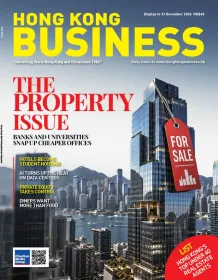
 Read Here
 Advertise
 Sign Up
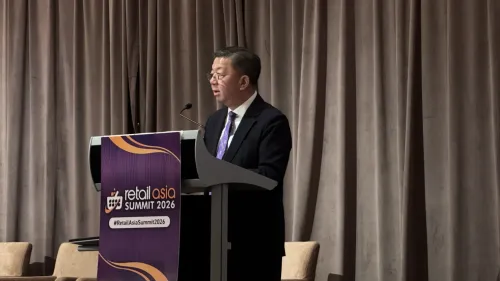

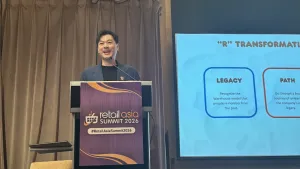









Commentary
International reserve currency
International reserve currency
Ice-cold office tombs and flying freezers
Knowledge advancements in Hong Kong
Will US’s declining economy affect Hong Kong?
How to attract your targeted customers?
Hong Kong as an emerging arbitration venue
Asian ETFs need more transparency
Insurance: A job sector in Asia that is very much alive and kicking
Heritage matters for Hong Kong companies too
Hong Kong will top the world in retail rents
Why holding HKD is the same as holding USD
Should women in boardrooms be regulated?
Busy? How to be stress-free in Hong Kong
Why a volatile fast changing world is good for Hong Kong
Hong Kong and the rest of Asia moves towards the "third place"
Blended Workforces: No longer a contingency plan
Social media as chopsticks for liberated entrepreneurs